


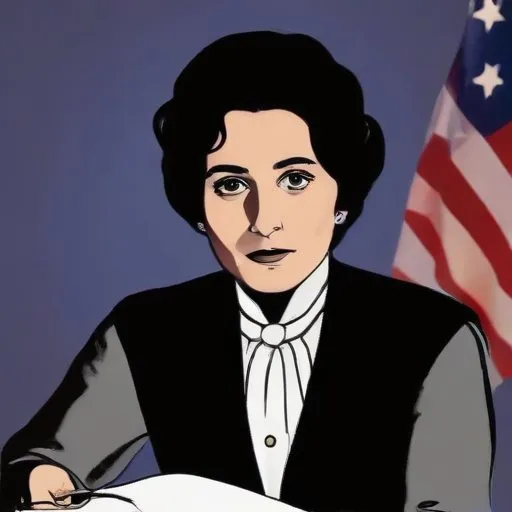
A pioneering writer, editor, and abolitionist who advocated for women's rights and the end of slavery through her influential writings and activism. Her work helped shape public opinion on social justice issues.
Eliza Lee Cabot Follen was a prominent American writer, editor, and abolitionist of the 19th century, recognized for her significant contributions to the literary world and her unwavering commitment to social reform. Through her extensive body of work, she promoted Christian values, advocated for the abolition of slavery, and inspired generations of readers with her poignant poetry and prose.
Born on August 15, 1787, in Boston, Massachusetts, Eliza Lee Cabot was the fifth of thirteen children in the esteemed Cabot family. Her father, Samuel Cabot, and mother, Sarah Barrett Cabot, ensured that she received a well-rounded education, laying the foundation for her future literary pursuits.
Follen's literary career spanned several decades, during which she published numerous popular and influential books. Some of her notable works include:
These works, characterized by her Christian piety and commitment to social reform, cemented her reputation as a prominent writer and thinker of her time.
Follen's writings reflected her deeply held Christian values and her commitment to social justice. She believed in the importance of education, particularly for women, and advocated for the abolition of slavery. Her philosophical contributions lay in her ability to articulate a Christian worldview that emphasized compassion, empathy, and social responsibility.
Follen's interest in the religious instruction of the young led her to edit the Christian Teachers' Manual in 1829. From 1843 to 1850, she also edited The Child's Friend, a periodical dedicated to promoting Christian values and education among children.
In 1828, Follen married Professor Charles Follen, a German educator and abolitionist. After his untimely death on board the Lexington in 1840, she dedicated herself to raising their only son, Charles Christopher, born in 1830. Her experiences as a widow and single mother deeply influenced her writing, as she continued to advocate for women's education and social reform.
Eliza Lee Cabot Follen's legacy extends far beyond her literary achievements. As a pioneering abolitionist and writer, she inspired generations of Americans to confront the injustices of slavery and to strive for a more equitable society. Her commitment to social reform and education continues to resonate with contemporary audiences, ensuring her place as a significant figure in American literary and social history.
Follen's poetry and prose, with their emphasis on Christian values and social responsibility, have influenced a range of literary and artistic works. From children's literature to devotional writings, her impact can be seen in the many authors and artists who have followed in her footsteps.
Follen's life and work were shaped by the tumultuous social and political landscape of 19th-century America. As a woman writer, educator, and abolitionist, she navigated the complex web of gender, race, and class to emerge as a powerful voice for social reform. Her legacy serves as a testament to the enduring power of literature to shape our understanding of the world and our place within it.
Born in 1803
A leading figure in the Transcendentalist movement, he advocated for individualism, self-reliance, and nature-inspired spirituality through his essays and poetry. His ideas continue to influence American thought and culture.
Born in 1817
A 19th-century thinker who advocated for simple living, civil disobedience, and individualism, inspiring generations to reevaluate their relationship with nature and society.
Born in 1810
A pioneering female journalist and critic who championed women's rights and social reform through her writings, particularly in her book "Woman in the Nineteenth Century".
Born in 1805
Founded an influential abolitionist newspaper, The Liberator, to advocate for the immediate emancipation of slaves. Known for his radical and uncompromising stance against slavery.
Born in 1802
A pioneering writer and abolitionist who penned influential works on social justice and women's rights, leaving a lasting impact on American literature and social reform.
Born in 1820
Pioneering figure in the women's suffrage movement, fighting for women's right to vote and own property. Her tireless efforts led to significant advancements in women's rights.
Born in 1815
Pioneering women's rights activist who led the women's suffrage movement, fighting for women's right to vote and own property.
Born in 1793
A pioneering Quaker minister and women's rights activist who fought for abolition and women's suffrage, playing a key role in the Seneca Falls Convention.
