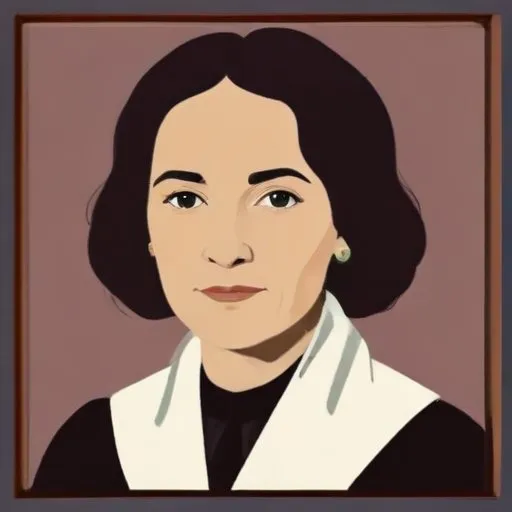
Elizabeth Cabot Agassiz: A Pioneering Educator and Naturalist
A Trailblazing Legacy in Education and Science
Elizabeth Cabot Agassiz was a renowned American educator, naturalist, and writer who left an indelible mark on the fields of education and science. As the cofounder and first president of Radcliffe College, she played a pivotal role in promoting women's education and empowering women to pursue careers in science.
Early Life and Education
Born on December 5, 1822, into a Boston Brahmin family of New England ancestry, Elizabeth Cabot Cary was the second of five daughters and seven children. Due to her fragile health, she received tutoring at home, where she developed a passion for languages, drawing, music, and reading. Informal history lessons from Elizabeth Peabody further fueled her curiosity and love for learning.
Career Highlights and Major Works
Agassiz's career was marked by significant contributions to the fields of education and natural history. Some of her notable works include:
- A First Lesson in Natural History (Boston, 1859), a textbook that introduced young readers to the wonders of natural history.
- Geological Sketches (1866), a seminal work that showcased her expertise in geology and scientific illustration.
- Coauthorship of natural history texts with her husband, Louis Agassiz, and her stepson, Alexander Agassiz, demonstrating her collaborative spirit and commitment to scientific inquiry.
Travel and Exploration
Agassiz's travels took her to Brazil with her husband from 1865 to 1866, where she meticulously recorded observations and collected specimens. Her account of the journey was published in the
Atlantic Monthly, showcasing her remarkable writing skills and attention to detail.
Influence on Modern Society
As a pioneering educator, Agassiz's work had a profound impact on modern society. Her dedication to women's education paved the way for future generations of women to pursue careers in science and academia. Her contributions to natural history and science education continue to inspire students and researchers worldwide.
Personal Milestones and Key Life Events
Agassiz's life was marked by significant personal milestones, including her marriage to Louis Agassiz in 1850 and her subsequent role as a supportive partner in his scientific endeavors. Her stepson, Alexander Agassiz, became a close collaborator and friend, further solidifying her place in the scientific community.
Philosophical Contributions and Beliefs
Agassiz's philosophical approach to education and science emphasized the importance of empirical observation, hands-on learning, and collaboration. Her commitment to scientific inquiry and discovery reflected her deep respect for the natural world and her desire to promote a deeper understanding of the world around us.
Legacy and Historical Context
Elizabeth Cabot Agassiz's remarkable life and legacy serve as a testament to the power of dedication, perseverance, and intellectual curiosity. Her contributions to education, natural history, and science continue to inspire and educate people around the world, cementing her place as a trailblazing figure in American science and education.
FAQ
What is Elizabeth Cabot Agassizs most notable achievement?
Elizabeth Cabot Agassizs most notable achievement is her role as co-founder of Radcliffe College, which was established in 1879. She was a pioneer in womens education and fought tirelessly for womens rights.
What was Elizabeth Cabot Agassizs relationship with Louis Agassiz?
Elizabeth Cabot Agassiz was married to Louis Agassiz, a Swiss-American biologist and geologist. She was his second wife and helped him with his scientific work, including the publication of his books.
What is the significance of Elizabeth Cabot Agassizs contribution to womens education?
Elizabeth Cabot Agassizs contribution to womens education is significant because she was a pioneer in the field. She believed in the importance of education for women and fought tirelessly to provide women with the same educational opportunities as men.
How did Elizabeth Cabot Agassizs upbringing influence her views on education?
Elizabeth Cabot Agassizs upbringing had a significant influence on her views on education. She was born into a family that valued education and was encouraged from a young age to pursue her intellectual interests.
What is Elizabeth Cabot Agassizs legacy in American education?
Elizabeth Cabot Agassizs legacy in American education is one of innovation and progress. She is remembered as a pioneer in womens education and a champion of womens rights.