


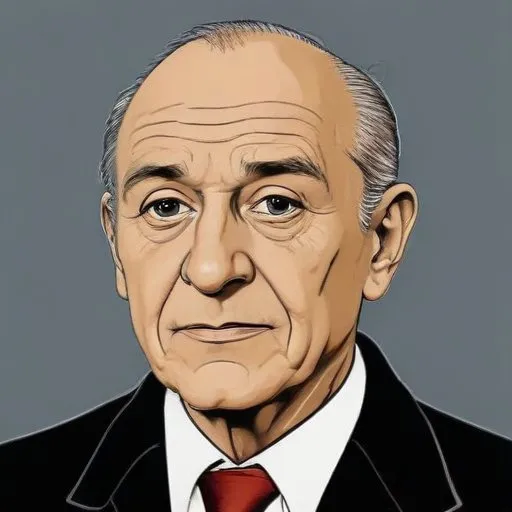
A Czech artist renowned for his vibrant, expressive portraits and landscapes, often blending traditional techniques with modernist elements. His works capture the essence of his subjects with remarkable sensitivity.
Emil Orlik, a Czech painter, etcher, and lithographer, is renowned for his innovative approaches to printmaking and his significant contributions to the development of modern art. His unique fusion of European and Asian influences, particularly from Japan, distinguished him as a trailblazer in the early 20th-century art world.
Born on July 21, 1870, in Prague, then part of the Austro-Hungarian Empire, Orlik was the son of a tailor. He began his artistic journey at the private art school of Heinrich Knirr, where he shared classes with the prominent artist Paul Klee. Orlik later enrolled at the Munich Academy, studying under Wilhelm Lindenschmit, and subsequently learned engraving from Johann Leonhard Raab.
In 1898, Orlik embarked on a European tour, visiting the Netherlands, Great Britain, Belgium, and Paris. During this period, he became fascinated with Japanese art and its impact on European art. This fascination led him to travel to Japan in 1900, where he spent several months learning woodcut techniques and immersing himself in the country's rich artistic heritage.
Orlik's artistic career spanned over three decades, during which he created an extensive range of works, including paintings, etchings, and lithographs. His notable works include Landschaft mit zwei Bäumen (1902), Berliner Straße (1907), and Zwei Frauenakte (1911). These pieces showcase his unique blend of European modernism and Japanese aesthetics.
Orlik's innovative approaches to printmaking and his introduction of Japanese techniques to European art circles had a profound impact on modern art. His work influenced a generation of artists, including George Grosz, one of his students at the Berlin College of Arts and Crafts.
In 1905, Orlik took a post at the School for Graphic and Book Art of the Museum of Decorative Arts in Berlin, later becoming a professor at the Berlin College of Arts and Crafts. His legacy extends beyond his own artistic accomplishments, as he played a significant role in shaping the development of modern art education.
Orlik's works are held in the permanent collections of numerous prestigious museums worldwide, including the Princeton University Art Museum, the British Museum, the Museum of Modern Art, and the Metropolitan Museum of Art, among others.
Emil Orlik's groundbreaking contributions to modern art, coupled with his tireless pursuit of innovation and cultural exchange, have cemented his position as a pioneering figure in the history of printmaking and beyond.
Born in 1860
A Czech painter and illustrator renowned for his distinctive Art Nouveau style, characterized by flowing lines, organic forms, and elegant typography, which adorned posters, advertisements, and artworks during the late 19th and early 20th centuries.
Born in 1863
A Norwegian painter who created iconic, emotionally charged works that explored the human experience, including the famous piece "The Scream".
Born in 1890
Austrian soldier and painter who captured the intensity of human emotion through bold, expressive portraits and landscapes, often exploring themes of death, sexuality, and the human condition.
Born in 1862
Austrian Symbolist master of opulent, gold-leaf adorned paintings and illustrations that explored the human form, often with erotic undertones. His works are synonymous with Viennese Art Nouveau.
Born in 1886
Austrian-Swiss artist who pioneered Expressionism through vibrant, emotive paintings and plays that explored the human condition. His works often featured distorted forms and bold colors.
Born in 1880
A German soldier-turned-painter who pioneered Expressionism, capturing the emotional essence of animals and landscapes in vibrant, abstracted forms. His work continues to inspire artists and art lovers alike.
Born in 1866
A pioneer of abstract art, creating vibrant, expressive works that explored the emotional and spiritual properties of color, and wrote extensively on art theory.
Born in 1879
A Swiss-German artist and educator who blended fantasy and reality in his vibrant, whimsical paintings, exploring the emotional and expressive qualities of color. His unique style has inspired generations of artists.
