


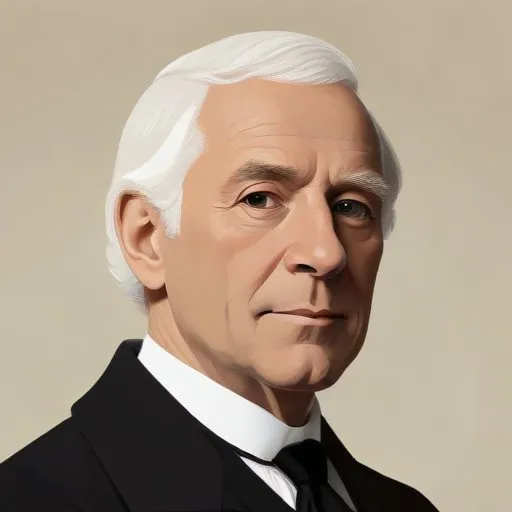
A 19th-century lawyer and politician who served as Governor of Massachusetts, known for his advocacy of education and prison reform. He played a significant role in shaping the state's social and political landscape.
Emory Washburn, a prominent American lawyer, politician, and historian, is best known for his remarkable contributions to the field of law, politics, and academia, particularly his foundational work on the early years of the Massachusetts Supreme Judicial Court.
Washburn was born on February 14, 1800, in Leicester, Massachusetts, to Joseph and Ruth Davis Washburn. After his father's untimely death, the local pastor, Zephaniah Swift Moore, played a significant role in shaping his early life and education. Washburn went on to attend Dartmouth College and Williams College, where he graduated in 1817.
Washburn's entry into politics was marked by his election to the Massachusetts State Legislature as a Whig in 1834. He served several terms, advocating for reform-minded policies. In 1853, he was elected as the Governor of Massachusetts, a position he held until 1855. Although his tenure was cut short by the Know Nothing movement, Washburn's commitment to public service remained unwavering.
In 1856, Washburn joined the faculty of Harvard Law School, where he became a beloved and influential figure. He taught for over two decades, mentoring numerous students who would go on to become prominent jurists and politicians. Washburn's scholarly contributions include his seminal work, A History of the Supreme Judicial Court of Massachusetts, as well as treatises on legal subjects and a history of his hometown, Leicester.
Emory Washburn's life and work left an indelible mark on American legal history, politics, and education. His contributions to Harvard Law School and the Massachusetts Supreme Judicial Court continue to inspire future generations of lawyers, judges, and scholars. Washburn's commitment to public service, scholarship, and teaching serves as a testament to the power of dedication and hard work.
As we reflect on Emory Washburn's remarkable life and accomplishments, we are reminded of the importance of scholarship, public service, and dedication to the greater good. His legacy continues to inspire us to strive for excellence and to make a positive impact on our communities.
Born in 1767
The 6th President of the United States was a skilled diplomat and leader who played a key role in shaping America's foreign policy and expansion. He's also known for being the son of a president and a president himself, making him part of a unique American political dynasty.
Born in 1782
A renowned lawyer and politician who served as the 14th United States Secretary of State, known for his exceptional oratory skills and influential role in shaping the country's early development.
Born in 1794
A 19th-century educator and politician who served as the 15th Governor of Massachusetts, known for his oratory skills and delivering the main speech at the Gettysburg National Cemetery dedication, overshadowed by Lincoln's Gettysburg Address.
Born in 1811
Leading abolitionist and senator who fought for civil rights and equality, playing a crucial role in shaping the Reconstruction Era.
Born in 1812
The 18th Vice President of the United States was a strong advocate for the abolition of slavery and played a key role in the passage of the 13th Amendment, earning him a place in American history. He was a dedicated public servant and politician who fought for social justice and equality.
Born in 1820
The 28th Governor of Massachusetts, serving from 1872 to 1874, is most known for his role in shaping the state's politics and economy during the Reconstruction Era. He was a strong advocate for education and infrastructure development.
