


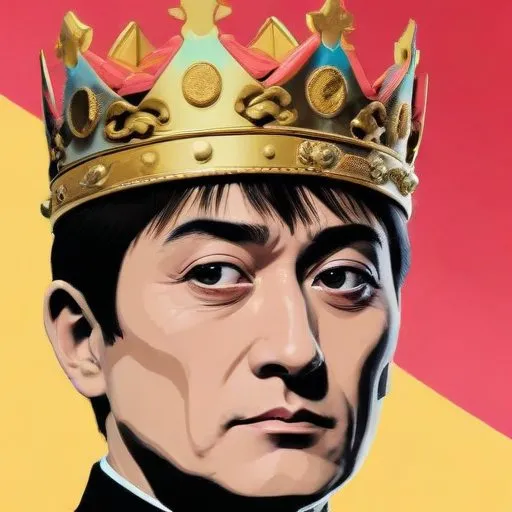
The 112th emperor of Japan, ruling from 1663 to 1687, known for his cultural and artistic achievements, particularly in poetry and calligraphy. He also reformed the imperial court and promoted Confucianism.
Emperor Reigen, posthumously honored as Reigentennō, is remembered as the 112th emperor of Japan, reigning from 1663 to 1687. During his reign, he played a significant role in promoting art, literature, and culture, earning him a reputation as a patron of the arts.
Born on July 9, 1654, as Satohito, Emperor Reigen was the 19th son of Emperor Go-Mizunoo. His mother, Lady-in-Waiting Kuniko, was the daughter of Minister of the Center Sonomootō. Reigen's Imperial family lived with him in the Dairi of the Heian Palace, where he grew up surrounded by at least 13 sons and 14 daughters.
Emperor Reigen had multiple wives and concubines, with whom he had many children. Some notable consorts include:
Some of his notable children include:
Emperor Reigen's reign saw a significant revival of traditional Japanese arts and culture. He was a patron of the Noh theater, and his court encouraged the development of literature, particularly waka poetry. The emperor himself was a skilled poet and calligrapher, and his works were widely admired.
Emperor Reigen's reign coincided with a period of relative peace and stability in Japan, following the tumultuous years of the Edo period. His patronage of the arts helped to foster a cultural renaissance, which had a lasting impact on Japanese society. Reigen's legacy as a patron of the arts has endured, earning him a place in Japanese history as a champion of culture and tradition.
Emperor Reigen's life and reign serve as a testament to the enduring power of art and culture in shaping Japanese society. His legacy continues to inspire generations of artists, poets, and musicians, ensuring his place as one of Japan's most beloved and revered emperors.
Born in 1675
The 113th emperor of Japan, who ruled from 1687 to 1709, is most known for his cultural achievements, particularly in poetry and calligraphy, and for his role in promoting the arts during the Genroku era. He was a patron of the famous poet Matsuo Bash? and encouraged the development of haiku poetry.
Born in 1702
The 18th emperor of Japan, ruling from 1709 to 1745, known for his cultural achievements, particularly in poetry and calligraphy. He also reformed the imperial court and promoted Confucianism.
Born in 1720
The 115th emperor of Japan, ruling from 1735 to 1747, known for promoting cultural and artistic developments, particularly in literature and poetry.
Born in 1543
Unified Japan's warring states, establishing a dynasty that ruled for over 250 years, and is revered as a brilliant military strategist and statesman.
Born in 1867
A leading figure in Japanese literature, known for revitalizing haiku poetry and creating a new style that focused on everyday life and nature. His work had a significant impact on modern Japanese literature.
