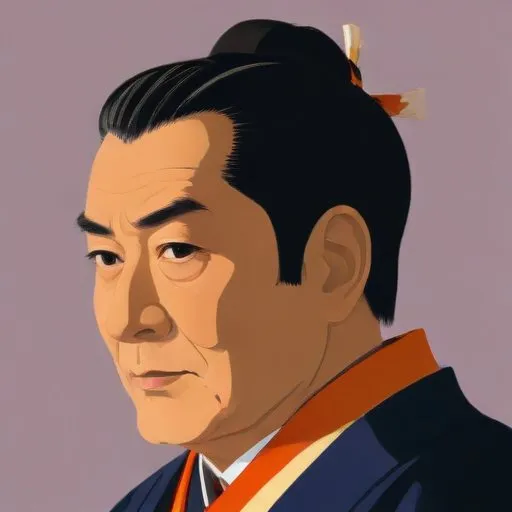
Emperor Higashiyama: The Era of Cultural Flourishing
Emperor Higashiyama, posthumously honored as Higashiyamatennō, is renowned for his reign as the 113th emperor of Japan, which spanned from 1687 to 1709, marking the Genroku era. During this period, Japan witnessed an unprecedented era of peace, economic stability, and cultural flourishing, earning him a revered place in Japanese history.
Early Life and Ascension
Born on October 21, 1675, as Prince Tomohito, or Asahito, he was the fifth son of
Emperor Reigen and a lady-in-waiting named Matsuki Muneko. Although born to a secondary consort, Prince Tomohito was adopted by Empress Takatsukasa Fusako, the chief consort, and grew up in the Dairi of the Heian Palace.
Reign and Cultural Achievements
Emperor Higashiyama's reign was characterized by a cultural renaissance, with significant advancements in theater, architecture, and literature. The Genroku era saw the rise of the popular Kabuki theater, which became an integral part of Japanese entertainment. The emperor's patronage of the arts led to the construction of numerous temples and shrines, including the famous Gokokuji temple in Edo, which remains one of the few Tokyo landmarks to have survived World War II.
The emperor's love for architecture is evident in the reconstruction of the Kyoto Imperial Palace, which was rebuilt in 1685 after a devastating fire. This project not only showcased the emperor's commitment to restoring the palace but also highlighted his interest in urban planning and design.
Personal Milestones and Key Life Events
- 1682: Prince Tomohito was proclaimed Crown Prince and given the pre-accession title of Gonomiya, marking the first ceremonial investiture in over 300 years.
- 1685: A great comet was observed crossing the night sky, coinciding with the death of Emperor Reigen's brother, former Emperor Go-Sai.
- 1687: Prince Tomohito acceded to the throne as Emperor Higashiyama upon his father's abdication.
- 1709: Emperor Higashiyama abdicated in favor of his son, Emperor Nakamikado, marking the end of his reign.
Legacy and Historical Context
Emperor Higashiyama's reign is often regarded as the "Golden Age" of Japanese history, marked by peace, prosperity, and cultural achievements. His legacy extends beyond his reign, as the Genroku era set the stage for the development of modern Japanese society.
Today, Emperor Higashiyama is remembered as a patron of the arts, a champion of cultural growth, and a leader who secured Japan's economic stability. His legacy serves as a testament to the power of visionary leadership and cultural entrepreneurship.
Inspirational Quotes
- "The arts are the flowers of civilization, and it is our duty to nurture them." - Emperor Higashiyama
Emperor Higashiyama's legacy continues to inspire generations, serving as a beacon of cultural excellence and leadership.
FAQ
What was Emperor Higashiyamas role in Japanese history?
Emperor Higashiyama was the 113th Emperor of Japan, who reigned from 1687 to 1709, and played a significant role in the countrys cultural and political development during the Edo period.
What were Emperor Higashiyamas major accomplishments?
Emperor Higashiyama is known for his patronage of the arts, particularly in the fields of literature, poetry, and calligraphy, as well as his support for the rebuilding of Kyotos temples and shrines.
What was Emperor Higashiyamas relationship with the Tokugawa shogunate?
Emperor Higashiyama maintained a complex and often tense relationship with the Tokugawa shogunate, which ruled Japan during his reign, and sought to balance the power of the imperial court with that of the shoguns.
What was Emperor Higashiyamas personal life like?
Emperor Higashiyama was known for his love of music, poetry, and calligraphy, and was a patron of several prominent artists and scholars of his time.
How did Emperor Higashiyama die?
Emperor Higashiyama died on January 16, 1713, at the age of 53, and was succeeded by his son, Emperor Nakamikado.