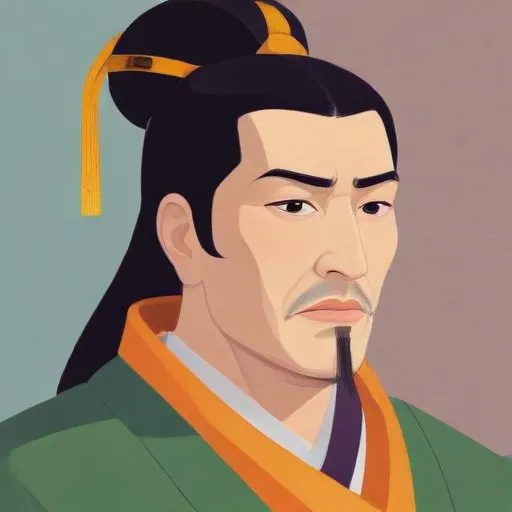
Emperor Shenzong of Song: The Visionary Monarch Behind China's Golden Age
A Champion of Reform and Centralization
Emperor Shenzong of Song, personal name Zhao Xu, is best known for his bold support of
Wang Anshi's New Policies, a series of radical reforms that transformed the fiscal, bureaucratic, and military landscape of China during the Song dynasty. As the sixth emperor of the Song dynasty, Shenzong's 18-year reign (1067-1085) was marked by his unwavering commitment to centralization, military conquest, and economic growth.
A Man of Action and Vision
Unlike his predecessors, Emperor Shenzong was a proactive and assertive leader who disagreed with the passive stance of his forebears. He sought to restore the prestige of the Song dynasty through conquest, expansion, and reform. To achieve this, he centralized fiscal matters, famously declaring, "If we are to raise troops for our frontier campaigns, then our treasuries must be full."
A Divided Court: The Struggle for Power
Emperor Shenzong's vision for a stronger, more centralized government was opposed by conservative factions, particularly Fu Bi and
Sima Guang, who feared the expansion of monarchical power and the disruption of the peaceful equilibrium with neighboring dynasties. Despite these challenges, Shenzong respected the conservative faction, keeping Fu Bi in the capital until 1072 and maintaining close relations with Sima Guang, whom he admired for his morality and intelligence.
Muslim Mercenaries: A Novel Solution
In a bold move, Emperor Shenzong hired 5,300 Muslim warriors from Bukhara to fight against the Khitan Liao dynasty in 1070. These mercenaries were settled in the north and northeast circuits, helping to repopulate areas ravaged by fighting and strengthening the empire's military presence.
Legacy: A Divided Assessment
Emperor Shenzong's reign remains controversial, with some historians praising his efforts to reform and strengthen the Song dynasty, while others criticize his centralization of power and aggressive military expansion. Despite these debates, his legacy as a visionary monarch who dared to challenge the status quo and push the boundaries of imperial power is undeniable.
Personal Milestones and Key Life Events
- Born on May 25, 1048, with the personal name Zhao Zhongzhen
- Changed his personal name to Zhao Xu after ascending to the throne
- Reigned from 1067 until his death on April 1, 1085
Historical Context and Legacy
Emperor Shenzong's reign marked a significant turning point in Song dynasty history, as he navigated the complex web of factional politics, military expansion, and economic reform. His legacy continues to influence Chinese history, with his bold policies and vision for a stronger, more centralized government shaping the course of imperial China.
FAQ
What is Emperor Shenzong of Songs historical significance?
Emperor Shenzong of Song was a Chinese emperor who ruled from 1067 to 1085, during the Song Dynasty. He is known for his military campaigns, administrative reforms, and cultural achievements.
What are Emperor Shenzong of Songs notable achievements?
Shenzong implemented several policies to strengthen the Song economy, including reforms to the taxation system and the establishment of a centralized imperial examination system.
What is Emperor Shenzong of Songs legacy?
Shenzongs reforms and military campaigns laid the foundation for the Song Dynastys golden age, which saw significant cultural, economic, and military achievements.
What is Emperor Shenzong of Songs family background?
Shenzong was the third son of Emperor Yingzong of Song and succeeded his brother, Emperor Zhenzong of Song, to the throne.
What are Emperor Shenzong of Songs contributions to Chinese culture?
Shenzong patronized scholars, artists, and writers, leading to a flourishing of culture and literature during his reign.