


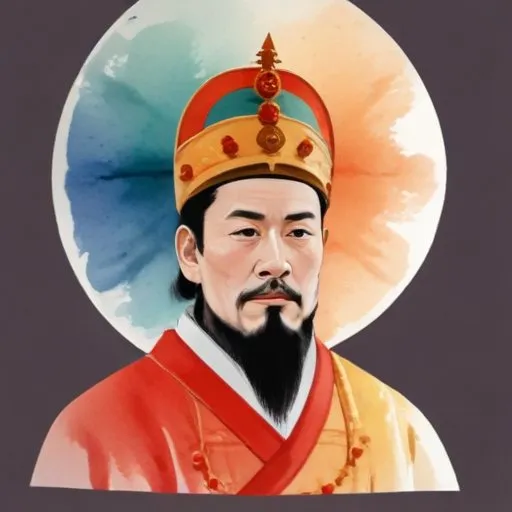
Seventh emperor of the Song Dynasty, known for his efforts to reform the government and military, as well as his patronage of Buddhism.
Known for his tumultuous reign and the reinstatement of Wang Anshi's reforms, Emperor Zhezong was the seventh emperor of the Song dynasty of China, reigning from 1085 to 1100. His reign was marked by factionalism, power struggles, and conflicting philosophies, making him a fascinating yet complex figure in Chinese history.
Born Zhao Yong on January 4, 1077, Emperor Zhezong was the sixth son of Emperor Shenzong. His original personal name was changed to Zhao Xu after his coronation. Following the death of his father, Zhezong ascended the throne at the tender age of nine, with his grandmother, Grand Empress Dowager Gao, serving as regent.
During his reign, Emperor Zhezong implemented significant reforms, including the reduction of taxes and the resumption of armed conflict with the Western Xia state, which eventually led to a more peaceful stance between the two nations. However, his inability to quell the infighting between conservative and liberal factions within his government ultimately contributed to the downfall of the Northern Song dynasty in the 12th century.
The Yuanyou era, which spanned from 1086 to 1093, was marked by Empress Gao's regency, during which she appointed conservative officials like Sima Guang as Chancellor. These officials halted Wang Anshi's reforms, which aimed to revitalize the Song economy. Emperor Zhezong was powerless to intervene, but upon Empress Gao's death in 1093, he was able to reinstate Wang Anshi's reforms and reduce Sima Guang's influence.
One of Emperor Zhezong's notable tutors was Cheng Yi, a founder of Neo-Confucianism. Cheng Yi proposed that Li principle, or the innate property of morality, could provide moral guidance. This philosophical stance had a lasting impact on Chinese thought and continues to influence Confucianism to this day.
Emperor Zhezong's reign, though marked by controversy and power struggles, laid the groundwork for the development of Neo-Confucianism and the eventual resurgence of Confucian thought in Chinese society. His reforms, though incomplete, paved the way for future emperors to build upon and further solidify the Song dynasty's legacy.
Despite the turmoil that marked his reign, Emperor Zhezong's legacy continues to fascinate historians and scholars alike, offering a unique glimpse into the complexities of Chinese politics and philosophy during the Song dynasty.
Born in 1077
Seventh emperor of the Song Dynasty, known for his efforts to reform the government and military, as well as his patronage of Buddhism.
Born in 1021
A pioneering economist and reformer who introduced groundbreaking policies to stabilize the economy and reduce poverty in 11th-century China, leaving a lasting legacy in Chinese history.
Born in 1019
A renowned historian and statesman who compiled the comprehensive history of China, "Zizhi Tongjian", a monumental work of 294 volumes that remains a valuable resource for Chinese historians.
