


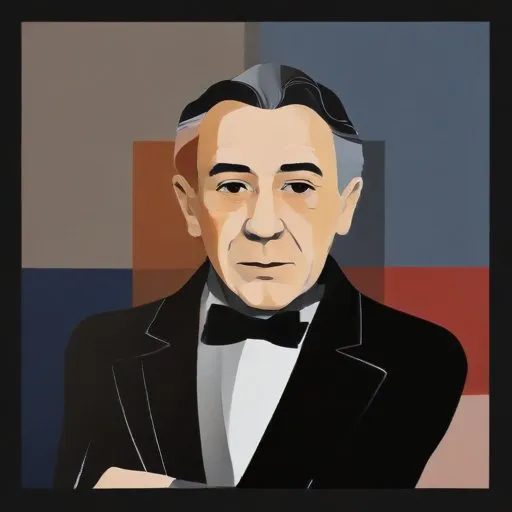
A renowned conductor and musicologist, he was a leading figure in promoting contemporary classical music, particularly through his work with the Ballets Russes. He was also a prolific writer on music theory and history.
Conductor, mathematician, and musical visionary, Ernest Ansermet is renowned for his precise and authoritative interpretations of modern classical music. As the founder of the Orchestre de la Suisse Romande, he championed the works of Stravinsky, Debussy, and Ravel, earning himself a reputation as one of the most important conductors of the 20th century.
Born on November 11, 1883, in Vevey, Switzerland, Ansermet's earliest passion was mathematics. He taught at the University of Lausanne before discovering his true calling – music. In 1912, he began conducting at the Casino in Montreux, which marked the beginning of his lifelong dedication to classical music.
Ansermet's encounters with Igor Stravinsky during World War I in Switzerland led to a lifelong friendship and collaboration. This association not only shaped Ansermet's understanding of Russian music but also influenced his entire career. He premiered Stravinsky's Capriccio with the composer as soloist, and their partnership would go on to produce numerous iconic recordings.
In 1918, Ansermet founded the Orchestre de la Suisse Romande (OSR), cementing his reputation as a conductor and champion of modern music. Under his leadership, the OSR rose to international prominence, recording a vast repertoire of works by Stravinsky, Debussy, Ravel, and other prominent composers.
Ansermet was an early advocate for jazz, recognizing its innovative spirit and artistic merit. In 1919, he penned an article praising Sidney Bechet, demonstrating his willingness to venture beyond the boundaries of classical music. This open-mindedness earned him a reputation as a conductor who could navigate the complexities of modern music.
Ansermet's extensive discography, largely recorded with Decca Records, showcases his meticulous attention to detail and commitment to accuracy. His interpretations, often differing from those of his contemporaries, remain authoritative and highly regarded. Despite some criticism regarding the OSR's technical proficiency, Ansermet's recordings continue to inspire and educate music lovers worldwide.
Ansermet's unyielding commitment to the original versions of Stravinsky's works led to disagreements with the composer, who frequently revised his scores. This philosophical divide highlights Ansermet's dedication to preserving the integrity of the composer's initial intent.
Ansermet's influence extends beyond his own performances and recordings. He inspired generations of conductors, musicians, and composers, shaping the course of modern classical music. His advocacy for avant-garde and jazz music helped legitimize these genres, paving the way for a more diverse and inclusive musical landscape.
Ernest Ansermet's remarkable life and career serve as a testament to the power of dedication, precision, and artistic vision. As a conductor, mathematician, and visionary, he leaves behind a legacy of excellence that continues to inspire and influence the world of classical music.
Born in 1882
A Russian master of music, renowned for revolutionizing classical music with bold, avant-garde compositions that blended traditional and modern elements. His iconic works, such as "The Rite of Spring," continue to inspire and influence artists across genres.
Born in 1872
A visionary who revolutionized ballet by combining avant-garde music, art, and dance, creating a new era of modern ballet. His company showcased works by renowned artists like Stravinsky and Picasso.
Born in 1897
A renowned conductor and composer, known for his precise and expressive performances, leading the Cleveland Orchestra to international acclaim. His interpretations of classical music remain highly influential.
Born in 1875
A renowned viola player and conductor, he was a leading figure in the development of modern orchestral performance, particularly in the interpretation of French and Russian music.
Born in 1891
A renowned violinist and conductor, leading the Boston Symphony Orchestra to new heights, and premiering works by famous composers like Debussy and Ravel.
Born in 1899
A renowned violinist and conductor, leading the Philadelphia Orchestra for over 40 years, known for his technical precision and interpretations of Romantic-era composers.
Born in 1912
A renowned maestro who led the Chicago Symphony Orchestra to international acclaim, known for his intense performances and numerous recordings of operas and symphonies.
