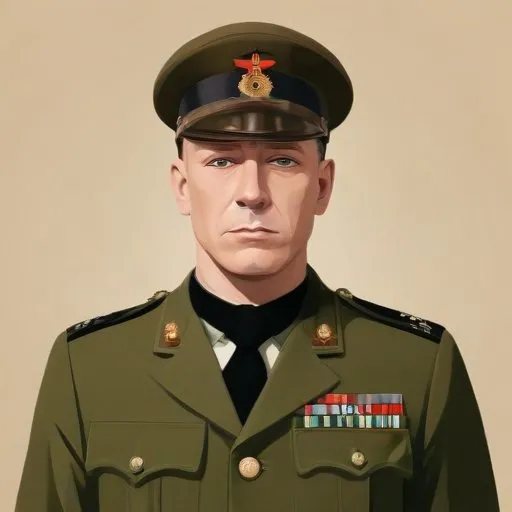
Ernest Swinton: The Visionary Behind the Development of the Tank
Early Life and Career
Major General Sir Ernest Dunlop Swinton, a British Army officer, was born on 21 October 1868 in Bangalore, India. His father, a judge with the Madras Civil Service, had a significant influence on his life. The family returned to England in 1874, and Swinton was educated at University College School, Rugby School, Cheltenham College, Blackheath Proprietary School, and the Royal Military Academy, Woolwich.
Rise to Prominence
Swinton was commissioned a second lieutenant in the Corps of Royal Engineers on 17 February 1888. He served in India, where he was promoted to lieutenant on 17 February 1891, and to captain on 17 February 1899. During the Second Boer War (1899-1902), he served as a captain and was awarded the Distinguished Service Order (DSO) in the September 1901 South African Honours list.
The Visionary Behind the Tank
Swinton's most significant contribution to modern warfare was his role in the development and adoption of the tank during World War I. Alongside fellow officer Lieutenant Colonel Walter Dally Jones, he initiated the use of the codename "tank" for the first tracked, armored fighting vehicles. This innovation revolutionized warfare, providing a game-changing advantage on the battlefield.
Writing and Historical Significance
Swinton was not only a military strategist but also a prolific writer. He authored several short stories on military themes, including the famous "The Defence of Duffers Drift," a military classic on minor tactics that has been used by the Canadian, British, and US Armies to train their NCOs and officers.
Controversies and Public Perception
Despite his significant contributions, Swinton's role in the development of the tank was often overshadowed by that of Lieutenant Colonel Ernest Albert William Benite, who is sometimes credited with the invention of the tank. However, most historians agree that Swinton's efforts played a crucial role in the adoption and development of the tank.
Personal Milestones and Key Life Events
- Swinton served as a staff officer and official historian of the Russo-Japanese War.
- He was appointed as the official British war correspondent during World War I.
- Swinton was knighted in 1923 for his services to the military.
Philosophical Contributions and Beliefs
Swinton's work on minor tactics and his advocacy for the development of the tank reflect his belief in the importance of adapting to modern warfare. He recognized the need for innovative solutions to overcome the stalemate of trench warfare and was instrumental in shaping the course of military history.
Historical Context and Legacy
Swinton's contributions to the development of the tank have had a lasting impact on modern warfare. His innovative approach to military strategy and his perseverance in promoting the adoption of the tank have made him an important figure in military history. Today, he is remembered as a visionary who changed the face of warfare forever.
Comparative Analysis with Contemporaries
When compared to his contemporaries, Swinton's achievements stand out for their far-reaching impact on military strategy. His work on the tank and his writing on minor tactics have had a lasting impact on military doctrine, setting him apart as a pioneer in his field.
Awards and Honors
Swinton was awarded the Distinguished Service Order (DSO) in 1901 and was knighted in 1923 for his services to the military.
Visual Timeline and Milestones
- 1868: Born in Bangalore, India
- 1888: Commissioned a second lieutenant in the Corps of Royal Engineers
- 1891: Promoted to lieutenant
- 1899: Promoted to captain
- 1901: Awarded the Distinguished Service Order (DSO)
- 1914-1918: Served as official British war correspondent during World War I
- 1923: Knighted for his services to the military
- 1951: Passed away on January 15
FAQ
What was Ernest Swintons role in World War I?
Ernest Swinton was a British Army officer who served in World War I. He is credited with developing the first practical tank, which was used to great effect in the Battle of Cambrai in 1917.
What was Ernest Swintons early life like?
Ernest Swinton was born in 1868 in Bangalore, India. He was educated at Rugby School and the Royal Military College at Sandhurst, and went on to serve in the British Army.
How did Ernest Swintons invention of the tank impact the war?
Ernest Swintons invention of the tank revolutionized warfare, allowing for the first time for armoured vehicles to be used on the battlefield. It gave the Allies a significant advantage over the Germans and helped turn the tide of the war.
What awards did Ernest Swinton win?
Ernest Swinton was awarded the Distinguished Service Order in 1917 for his role in developing the tank.
What is Ernest Swintons legacy?
Ernest Swintons legacy is as a pioneering inventor and military strategist who played a crucial role in the development of modern warfare. His invention of the tank has had a lasting impact on military tactics and strategy.