


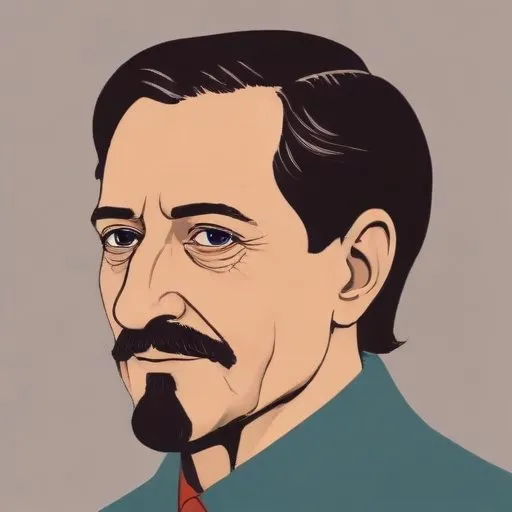
A German writer and poet who advocated for German unification and nationalism through his patriotic works, inspiring a sense of national identity and pride.
Ernst Moritz Arndt was a renowned German nationalist, historian, writer, and poet, born on December 26, 1769, in Gross Schoritz, Swedish Pomerania (now part of Garz on the island of Rügen). He is best known for his steadfast advocacy for the abolition of serfdom and his unwavering resistance against Napoleonic dominance over Germany, earning him a reputation as one of the main founders of German nationalism during the Napoleonic wars and the 19th-century movement for German unification.
Arndt's anti-French sentiments were deeply rooted in his strong sense of German nationalism. He was forced to flee to Sweden due to his vocal opposition to French dominance, which led to his involvement in the early national and liberal Burschenschaft movement. His influential song, "Was ist des Deutschen Vaterland," became an unofficial German national anthem, showcasing his commitment to German unity and independence.
Arndt's philosophical contributions were deeply influenced by the German idealist philosopher Gottlieb Fichte, whose ideas on national identity and self-determination resonated with Arndt's own beliefs. Arndt's philosophy centered around the notion that the German people had a unique cultural and historical identity that needed to be protected and preserved.
While Arndt's contributions to the German unification movement are undeniable, his legacy has been marred by controversy. His strongly anti-Semitic and anti-Polish statements have led to a highly critical view of him today, with some critics labeling him a demagogue.
Despite the controversies surrounding his legacy, Arndt's impact on modern German society is undeniable. His advocacy for German nationalism and unification continues to inspire generations of Germans, and his work remains a testament to the power of political activism and literary expression.
"Was ist des Deutschen Vaterland?" (What is the German's Fatherland?), a famous phrase from Arndt's eponymous song, has become a rallying cry for German nationalists and a symbol of German unity.
Born in 1749
A German literary giant who penned iconic works like "Faust" and "The Sorrows of Young Werther", shaping the Romantic movement and influencing countless writers.
Born in 1759
A renowned poet and playwright who crafted influential works that explored the human condition, morality, and the struggle for freedom, leaving a lasting impact on German literature.
Born in 1770
A German philosopher and academic who developed a comprehensive and systematic philosophy that emphasized the unity of all things and the dialectical process of thesis, antithesis, and synthesis. His ideas have had a profound impact on modern thought, influencing fields such as philosophy, politics, and art.
Born in 1788
A pessimistic philosopher who wrote about the human condition, emphasizing the struggles and sufferings of life, and is famous for his concept of the "will to life".
Born in 1724
Developed influential philosophical frameworks, such as the Critique of Pure Reason, that shaped modern Western thought on ethics, morality, and human understanding.
Born in 1797
A 19th-century literary mastermind who penned poignant poetry and biting social commentary, known for his witty satire and romantic verses that still resonate today.
Born in 1787
A 19th-century German literary figure who wrote romantic poetry and studied medieval history and literature, known for his lyrical and patriotic works. He's a significant contributor to the German literary canon.
