


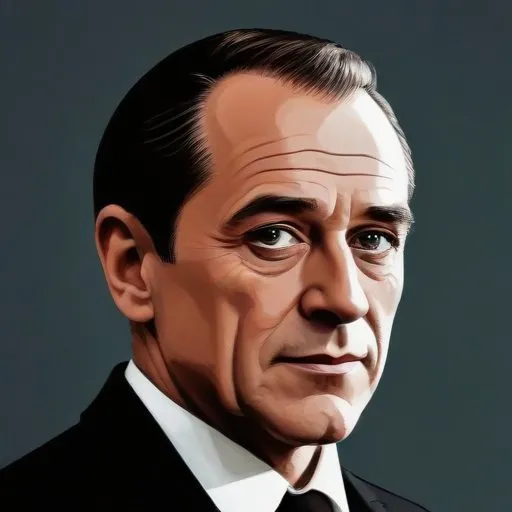
A German silent film actor, known for his striking features and intense performances in films like "The Cabinet of Dr. Caligari" and "Nosferatu".
Ernst Pittschau, a German stage and film actor, epitomized elegance on screen, charming audiences with his dashing performances as a lover in numerous films and plays. Born on October 5, 1883, Pittschau's career spanned over four decades, leaving an indelible mark on the early 20th-century entertainment industry.
Following in his father's footsteps, Ernst Pittschau took to the stage, receiving his first theatrical engagement in 1905 in Koblenz, Germany. His early career saw him perform in New York City and Berlin, before transitioning to film in 1912. In the 1920s, Pittschau's film roles diminished, and he shifted his focus to theater, performing at notable institutions like the Theater am Kurfürstendamm and the Komödie.
As the years went by, Pittschau's career slowed, and he struggled to find work. During the 1940s, he faced poverty and had to rely on the support of the Goebbels-supported foundation for artists, Knstlerdank. It wasn't until after World War II that Italian director Roberto Rossellini brought Pittschau back to the limelight with a role in the survival drama, Germany, Year Zero, in 1948.
Ernst Pittschau's half-brother, Werner Pittschau, was also a stage and film actor, who tragically died in a car crash in 1928. This familial connection highlights the strong bond between the Pittschau brothers and their passion for the performing arts.
Ernst Pittschau's contributions to German cinema and theater continue to inspire modern-day actors and filmmakers. His legacy serves as a testament to the power of perseverance and the importance of supporting artists in times of need. Despite facing personal struggles, Pittschau's dedication to his craft earned him a place among the iconic figures of early 20th-century entertainment.
In the context of film history, Ernst Pittschau's career mirrors the evolution of German cinema, from the early days of silent films to the emergence of new wave cinema. His work serves as a bridge between two eras, connecting the past with the present.
Throughout his life, Pittschau experienced both triumph and adversity. His struggles during the 1940s and subsequent comeback in the late 1940s demonstrate his resilience and determination. In the end, Ernst Pittschau's story serves as an inspiration to artists and non-artists alike, showcasing the importance of perseverance and dedication to one's craft.
Born in 1902
A renowned German actor, celebrated for his versatility in playing a wide range of roles, from comedy to drama, in numerous films and stage productions.
Born in 1901
A popular German film actor of the 1920s-1950s, starring in over 100 movies, including musical comedies and romantic dramas. He was a beloved matinee idol and cultural icon of his time.
Born in 1914
A Czech-Austrian actress and mistress of Joseph Goebbels, known for her stunning beauty and controversial relationships with high-ranking Nazi officials.
Born in 1907
A Swedish actress and singer who captivated audiences with her powerful voice and iconic film roles, becoming a beloved star of German cinema during the 1930s and 1940s.
