


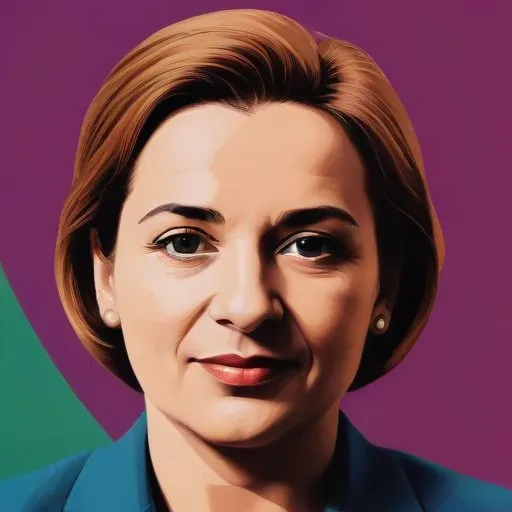
A pioneering female economist and politician who played a key role in shaping Hungary's post-WWII economy and held various government positions. She was a trailblazer for women in politics and economics.
Etelka Keser, a Hungarian economist and politician, left an indelible mark on her country's economic and political landscape. As the Minister of Light Industry from 1971 to 1980, she played a pivotal role in shaping Hungary's industrial sector during a tumultuous period in its history.
Born on August 26, 1925, Keser'searly life was marked by a passion for economics and politics. She embarked on her political and economic career in 1950, becoming a member of the Hungarian Socialist Workers' Party (MSZMP). Her dedication and expertise soon earned her a position as Deputy Minister of Domestic Trade in 1967, a role she held until 1971.
In 1971, Keser made history by becoming the last Minister of Light Industry, a position she held until 1980. During her tenure, she worked tirelessly to merge the Ministry of Light Industry with the Ministry of Industry, a move that redefined Hungary's industrial landscape. Her leadership and vision earned her a place in the presidium of the Hungarian Women's National Council (MNOT) from 1971 to 1990.
Keser's contributions extended far beyond her ministerial role. She was elected into the Central Committee of the Hungarian Socialist Workers' Party (MSZMP) in 1975, a position she held until 1985. Her expertise in economics and politics led to her appointment as co-President of the Hungarian Chamber of Commerce (MKK) between 1981 and 1986.
Throughout her career, Keser was driven by a passion for education and social welfare. Her literary contributions include co-authoring "Iskolai ifjsgi olvasmozgalom" (School Youth Reading Movement) in 1952 and "Belkereskedelmnk idszer krdsei" (Our Domestic Trade Questions) in 1962. These works reflect her commitment to empowering the Hungarian people through education and economic development.
Etelka Keser's legacy is one of trailblazing leadership and economic vision. Her contributions to Hungary's industrial sector, education, and social welfare have left a lasting impact on the country. As a pioneering female politician, she paved the way for future generations of women in politics and economics.
Keser's passing on April 1, 2018, at the age of 92, marked the end of an era. Her life's work serves as a testament to her unwavering dedication to her country and its people. As we reflect on her remarkable journey, we are reminded of the power of perseverance, leadership, and vision in shaping a nation's destiny.
94 Years Old
The 37th Prime Minister of Hungary, serving from 1994 to 1998, known for his efforts to transition the country from communism to a market economy and joining NATO. He implemented significant economic reforms and played a key role in Hungary's integration into Western institutions.
63 Years Old
The 38th Prime Minister of Hungary, known for his nationalist and conservative policies, has been a dominant figure in Hungarian politics for over two decades, shaping the country's identity and relationship with the EU.
65 Years Old
Hungary's 6th Prime Minister, a key figure in the country's transition to democracy, known for his economic reforms and leadership during the 2006 protests.
58 Years Old
The 7th Prime Minister of Hungary, a key figure in the country's economic reforms, known for his efforts to stabilize the economy during the 2008 financial crisis.
