


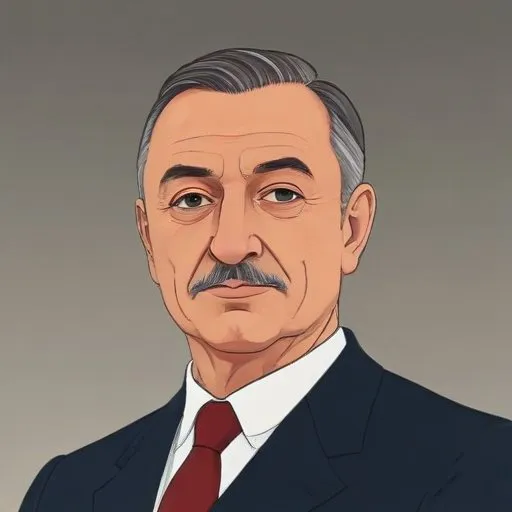
Hungary's 6th Prime Minister, a key figure in the country's transition to democracy, known for his economic reforms and leadership during the 2006 protests.
Ferenc Gyurcsny, a name synonymous with Hungarian politics, is a renowned entrepreneur and politician who served as the Prime Minister of Hungary from 2004 to 2009. He is widely recognized for his leadership and vision, which propelled Hungary towards economic growth and social reform.
Born on June 4, 1961, in Pápa, Hungary, Gyurcsny hails from an impoverished middle-class family. His father, Ferenc Gyurcsny Sr., was convicted of minor crimes, including theft and fraud, multiple times, and struggled with alcoholism. Despite these challenges, Gyurcsny's mother, Katalin Varga, ensured that her son received a good education.
Gyurcsny attended Apczai Csere Jnos High School in Budapest for two years before returning to Pápa to continue his studies at a local grammar school. His academic pursuits laid the foundation for his future success in politics and entrepreneurship.
Gyurcsny's political career began in 2003, when he was appointed as the Minister of Youth Affairs and Sports. His leadership skills and vision soon propelled him to the position of Prime Minister, which he held from 2004 to 2009. During his tenure, he implemented several reforms, including the privatization of state-owned companies and the reduction of bureaucracy.
In 2006, Gyurcsny led his coalition to victory in the parliamentary elections, securing another term as Prime Minister. Two years later, in 2008, he became the leader of the Hungarian Socialist Party (MSZP), winning 89% of the vote.
Gyurcsny's leadership was not without controversy. He faced criticism for his handling of the economy, particularly during the 2008 global financial crisis. In 2009, he announced his intention to resign as Prime Minister, citing the need for a new government to tackle the country's economic challenges.
After his resignation, Gyurcsny continued to play an active role in Hungarian politics. In 2011, he quit the MSZP and established the Democratic Coalition (DK), a new political party, which he leads to date.
Gyurcsny's political philosophy is centered around social democracy and liberal values. He believes in the importance of individual freedom, equality, and social justice. Throughout his career, he has advocated for policies that promote economic growth, education, and innovation.
Gyurcsny is married to Klára Dobrev, a lawyer and politician. The couple has five children together. In his free time, Gyurcsny enjoys reading and playing football.
Ferenc Gyurcsny's legacy is complex and multifaceted. While his leadership was marked by controversy and challenges, he is also credited with implementing reforms that shaped Hungary's economy and society. His advocacy for social democracy and liberal values continues to inspire a new generation of Hungarian politicians and citizens.
Gyurcsny's impact on modern society is undeniable. He has left an indelible mark on Hungarian politics, and his vision for a more just and equitable society continues to resonate with people across the nation.
Ferenc Gyurcsny's story is a testament to the power of leadership, vision, and perseverance. As a Hungarian politician, entrepreneur, and advocate for social democracy, he has left an enduring legacy that continues to inspire and shape the nation's destiny.
63 Years Old
The 38th Prime Minister of Hungary, known for his nationalist and conservative policies, has been a dominant figure in Hungarian politics for over two decades, shaping the country's identity and relationship with the EU.
58 Years Old
The 7th Prime Minister of Hungary, a key figure in the country's economic reforms, known for his efforts to stabilize the economy during the 2008 financial crisis.
92 Years Old
A Hungarian journalist, author, and politician who played a significant role in shaping the country's post-communist era through his writings and political activism. He's known for his nationalist and conservative views.
