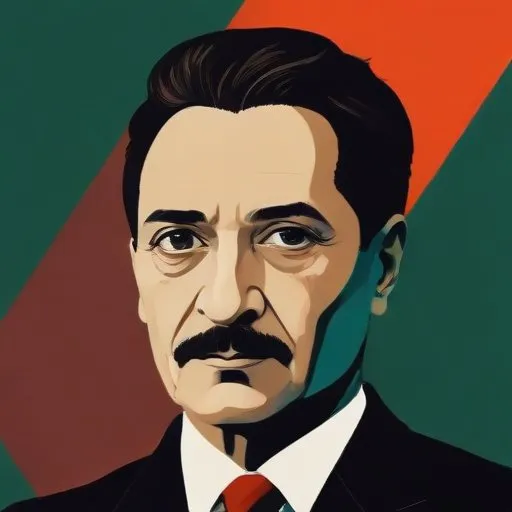
Istvn Csurka: The Controversial Hungarian Politician and Writer
A Life of Politics and Literature
Istvn Csurka was a Hungarian nationalist politician, journalist, and writer who left an indelible mark on the country's political landscape. As the founder and inaugural leader of the Hungarian Justice and Life Party (MIP), he was known for his radical national-conservative views and his outspoken criticisms of the Hungarian government.
Early Life and Career
Born on March 27, 1934, in Budapest, Csurka was the son of Pter Csurka, a journalist. His younger brother, Lszl Csurka, was an actor and director. Istvn's early life was marked by turmoil, as he was interned after the Hungarian Revolution of 1956 for half a year. During this time, he was recruited as a III/III agent, a fact he would later reveal in the early 1990s, alleging that he had signed the declaration of recruitment under duress.
Rise to Prominence
Csurka was a founding member of the Hungarian Democratic Forum and a member of the first elected Parliament of Hungary after the fall of the communist-socialist regime. As a renowned novelist and drama author, he was a source of critical opinion towards the regime, but also an informant to the Hungarian secret police, a fact that would later spark controversy.
Leadership and Controversy
In October 1994, Csurka became the chairman of the Hungarian Justice and Life Party (MIP), a radical national-conservative group that peaked at 5% of voter support between 1998 and 2002. Throughout his career, Csurka was known for his verbal anti-Semitism and his claims that Zionists were planning to establish a second home in Hungary. His views sparked widespread criticism and concern, both domestically and internationally.
Personal Milestones and Key Life Events
- March 27, 1934: Born in Budapest, Hungary
- 1956: Interned after the Hungarian Revolution
- Early 1990s: Revealed his past as a III/III agent
- October 1994: Became chairman of the Hungarian Justice and Life Party (MIP)
- February 4, 2012: Passed away
Legacy and Impact
Istvn Csurka's legacy is marked by controversy and criticism, but also by his unwavering commitment to his national-conservative ideals. Love him or hate him, Csurka was a complex figure who left an indelible mark on Hungarian politics and literature. As a writer, he was prolific, producing numerous novels and dramas that continue to be studied and debated today.
Quotes and Memorable Sayings
- "I am the representative of 3 million Hungarians who live outside Hungary, in the aftermath of the Treaty of Trianon." - Istvn Csurka
Historical Context and Legacy
Csurka's life and career are deeply intertwined with the turbulent history of Hungary, from the communist-socialist regime to the country's transition to democracy. His radical views and controversial statements serve as a testament to the complexities and challenges of Hungary's recent past.
FAQ
What was István Csurkas role in Hungarian politics?
István Csurka was a prominent Hungarian politician who served as the Minister of Culture and Education from 1993 to 1994. He was also the leader of the Hungarian Justice and Life Party.
What were István Csurkas contributions to Hungarian literature?
István Csurka was a prolific writer and playwright, publishing numerous books and plays that explored themes of Hungarian identity and culture. His works often tackled sensitive topics, sparking controversy and debate.
How did István Csurkas views on Hungarian identity shape his politics?
István Csurkas strong views on Hungarian identity and nationalism greatly influenced his political beliefs and policies. He advocated for a stronger Hungarian state and was critical of Western influences on Hungarian culture.
What was István Csurkas stance on minority rights in Hungary?
István Csurkas views on minority rights were often criticized as being discriminatory, particularly towards Roma and Jewish communities. His policies sought to promote Hungarian interests over those of minority groups.
How did István Csurkas legacy impact Hungarian politics?
István Csurkas legacy remains controversial in Hungary, with some viewing him as a champion of Hungarian identity and others seeing him as a xenophobic nationalist. His influence can still be seen in Hungarian politics today.