


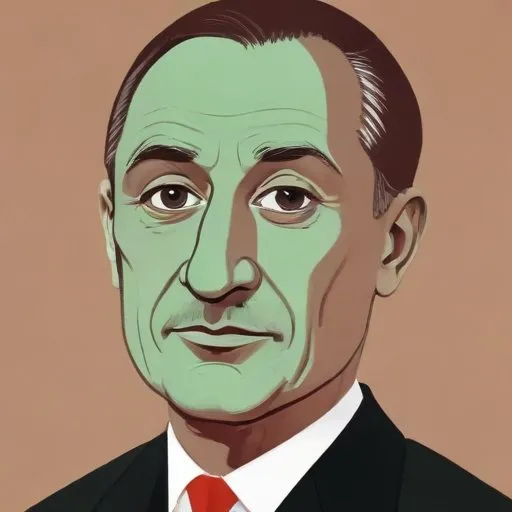
The 54th Prime Minister of Hungary, a lawyer-turned-politician who served from 1993 to 1994, known for his brief but significant tenure during Hungary's transition to democracy.
Boross was born on August 27, 1928, in Nagybajom, Hungary. His father, Gyorgy Boross, was a veteran of World War I and a member of the Order of Vitez, while his mother, Lujza Horvath, came from a smallholder farming family. The Boross children were raised in a family that valued education, and Peter went on to attend the Hunyadi Mátyás Honvéd Secondary School and Institution in Keszeg.
Boross's political career began in the 1990s, when he joined the Hungarian Democratic Forum (MDF). He quickly rose through the ranks, serving as Minister of Civilian Intelligence Services from 1990 to 1991 and Minister of the Interior from 1991 to 1993. Following the death of his predecessor, József Antall, Boross assumed the office of Prime Minister in December 1993.
During his prime ministership, Boross faced numerous challenges, including the transition to a market-based economy and the country's integration into the European Union. Despite these obstacles, he implemented several key reforms, including the privatization of state-owned enterprises and the decentralization of government power. However, his right-wing coalition was ultimately defeated in the 1994 elections by the Hungarian Socialist Party, led by Gyula Horn.
After leaving office, Boross remained active in politics, serving as a Member of Parliament from 1994 to 1998 and again from 2006 to 2009. He continued to play a key role in the MDF, advocating for democratic values and human rights.
Peter Boross's legacy is that of a dedicated public servant who played a crucial role in Hungary's transition to democracy. Despite the challenges he faced during his tenure as Prime Minister, he remained committed to the principles of democracy and human rights. Today, he is remembered as a respected figure in Hungarian politics.
Boross has a younger brother, László, who is a teacher. He is also a proud husband and father, and has dedicated himself to various philanthropic causes throughout his life.
Boross's commitment to democracy and human rights has inspired generations of Hungarians. His legacy continues to shape the country's political landscape, and his contributions to the development of Hungarian democracy are immeasurable.
63 Years Old
The 38th Prime Minister of Hungary, known for his nationalist and conservative policies, has been a dominant figure in Hungarian politics for over two decades, shaping the country's identity and relationship with the EU.
65 Years Old
Hungary's 6th Prime Minister, a key figure in the country's transition to democracy, known for his economic reforms and leadership during the 2006 protests.
58 Years Old
The 7th Prime Minister of Hungary, a key figure in the country's economic reforms, known for his efforts to stabilize the economy during the 2008 financial crisis.
