


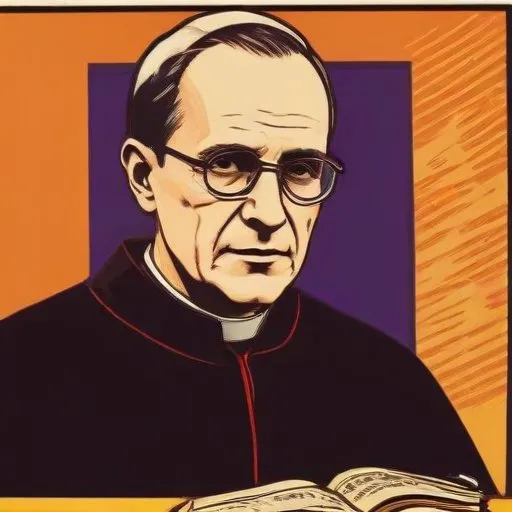
A Catholic priest and theologian who challenged traditional Church teachings, advocating for a more progressive and inclusive approach to faith, and authoring influential books on psychology and spirituality.
Eugen Drewermann, a German church critic, theologian, and peace activist, is best known for his unconventional approach to Christianity, advocating for a nonviolent form of the religion that integrates Depth psychology into Exegesis and Theology. His work, translated into over a dozen languages, has sparked controversy and debate within the Catholic Church, making him a household name in Germany.
Born on June 20, 1940, in Bergkamen, near Dortmund, Germany, Drewermann's academic pursuits took him through philosophy, theology, psychoanalysis, and comparative religious studies. This diverse educational background has enabled him to bring a unique perspective to his work, questioning traditional Catholic dogma and promoting a more symbolic understanding of biblical stories.
Drewermann's criticism of the Catholic Church's literal and biologistic interpretations of miracles, the virgin birth, Ascension, and Resurrection as superstitious and medieval has been met with resistance from the highest echelons of the Church. In 1986, Cardinal Ratzinger, later Pope Benedict XVI, expressed deep concern over Drewermann's opinions in a letter to the Archbishop of Paderborn, Johannes Joachim Degenhardt.
This controversy culminated in 1991 with the publication of his radical critique, "Kleriker Psychogramm eines Ideals" (Clergy Psychogram of an Ideal), which challenged the Vatican's "psychologically cruel and mentally enslaving clergy ideal." The debate that ensued between Drewermann and the Catholic Bishops Conference of Germany was closely followed by the media and public, ultimately leading to the revocation of his license to teach at the Catholic Seminary of Paderborn and preach in 1992.
Drewermann has been an outspoken critic of war and military intervention, opposing the Gulf War, the Iraq War, German participation in the NATO war against Afghanistan, and Israeli Air Raids during the 2006 Lebanon War. His strong stance on these issues has made him a prominent figure in the German Peace Movement.
Drewermann's work has had a significant impact on modern society, inspiring a new generation of theologians and peace activists to question traditional authority and strive for a more compassionate and nonviolent world. His integration of Depth psychology into theology has opened up new avenues for understanding and interpreting biblical stories, making them more relatable and healing for contemporary readers.
Through his tireless advocacy for peace and his unwavering commitment to challenging the status quo, Eugen Drewermann has left an indelible mark on the world of theology and beyond. His courage in the face of adversity has inspired countless individuals to strive for a more just and compassionate society.
Born in 1904
A German priest and theologian who sought to reconcile Catholicism with modern philosophy, exploring the intersection of faith and reason. His work greatly influenced 20th-century Catholic theology.
98 Years Old
A prominent Catholic theologian and prolific author, known for his progressive views on Christianity and criticism of the Catholic Church's authority. He wrote extensively on theology, ethics, and politics.
97 Years Old
A German theologian and author who wrote extensively on feminist theology, politics, and spirituality, challenging traditional Christian dogma and advocating for social justice. 42
Born in 1926
A German theologian and academic who developed a unique blend of Christian theology and social activism, advocating for a more inclusive and just society. He's known for his work on the theology of hope and the concept of "the crucified God".
98 Years Old
A prominent Christian theologian and academic who developed a comprehensive and influential theological system, known for his work on the intersection of Christianity and modern science.
Born in 1881
Reformed the Catholic Church, introducing progressive reforms and ecumenical dialogue, and convened the Second Vatican Council.
Born in 1417
A 15th-century pope who played a significant role in the fall of the Western Schism, ending the division in the Catholic Church. He's also known for his lavish spending and nepotism.
