


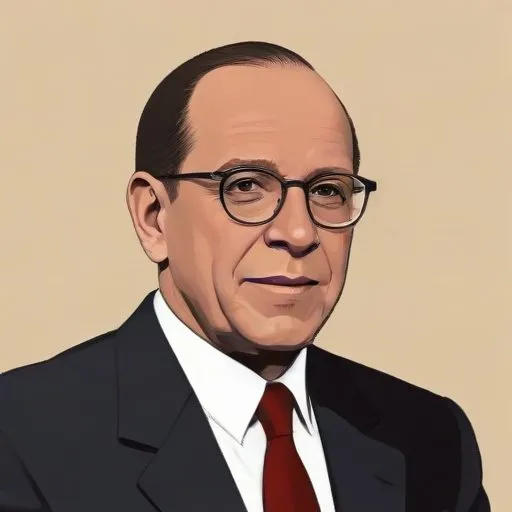
A prominent figure in the ecumenical movement, he worked towards Christian unity and social justice, playing a key role in the merger of Presbyterian denominations.
Eugene Carson Blake, a beacon of progressive thought and ecumenical unity, left an indelible mark on the Protestant Christian world. As a champion of racial desegregation and denominational unity, Blake's courageous stance and tireless efforts continue to inspire generations of Christian leaders and laypeople alike.
Born on November 7, 1906, in St. Louis, Missouri, Blake was the son of Lulu and Orville Prescott Blake. He graduated from Princeton University in 1928 with a Bachelor of Arts and later from Princeton Theological Seminary in 1932 with a Bachelor of Theology. His intellectual pursuits took him to the University of Edinburgh, where he attended classes that further shaped his theological perspective.
Blake's ministerial journey began in 1928, when he taught at the Forman Christian College in Lahore, Pakistan. Upon his return to the United States, he served as a minister in various Presbyterian churches in New York City, Albany, and Pasadena. His leadership skills and dedication to the faith led to his appointment as the Senior Minister of Pasadena Presbyterian Church, a position he held for eleven years.
In 1951, Blake became the Stated Clerk of the General Assembly of the PCUSA, a role he fulfilled until 1966. During this period, he also served as the president of the National Council of Churches from 1954 to 1957. This experience laid the groundwork for his later appointment as the General Secretary of the World Council of Churches, a position he held from 1966 to 1972.
Blake's most enduring legacy is his unwavering commitment to Christian unity and social justice. In 1960, he delivered a seminal sermon calling for the unification of major Protestant denominations into one church. This sermon sparked the 40-year Consultation on Church Union, an ecumenical effort aimed at uniting ten mainline denominations.
In 1963, Blake stood alongside Martin Luther King Jr. and eight other prominent Christian leaders in the iconic March on Washington. This watershed event solidified his reputation as a champion of civil rights and social justice.
Throughout his life, Blake has received numerous honors and awards for his tireless work in promoting Christian unity and social justice. As a trustee of Princeton Seminary, he has inspired generations of theological scholars and Christian leaders.
Blake's philosophical contributions to Protestant Christianity are multifaceted and far-reaching. His emphasis on ecumenical unity, racial desegregation, and social justice has left an indelible mark on the Christian landscape.
Eugene Carson Blake's remarkable life and legacy serve as a testament to the power of faith, courage, and determination. As a champion of Christian unity and social justice, his influence continues to shape the Protestant Christian world, inspiring future generations of leaders and laypeople to strive for a more just and unified world.
Born in 1888
A prominent Cold War diplomat who served as Secretary of State under President Dwight D. Eisenhower, known for his anti-communist foreign policy and role in shaping the United States' response to the Soviet Union.
Born in 1890
Led the Allied forces to victory in World War II and later served as President, maintaining peace and prosperity during the Cold War era. He's known for his strategic leadership and diplomatic skills.
Born in 1884
The 33rd President of the United States, a strong leader who made tough decisions, including dropping atomic bombs on Japan and establishing the Marshall Plan to rebuild Europe after WWII.
Born in 1882
Led the United States through the Great Depression and World War II, implementing a series of reforms known as the New Deal and helping to establish the country as a global superpower.
Born in 1867
A prominent figure in American politics, serving as Secretary of State and playing a key role in shaping foreign policy during World War II. He's also known for his advocacy of international cooperation and collective security.
Born in 1880
A highly decorated military leader and statesman who played a crucial role in shaping post-WWII foreign policy and was awarded the Nobel Peace Prize for his efforts. He's most known for authoring the Marshall Plan, a massive economic aid program that helped rebuild war-torn Europe.
Born in 1893
The 51st United States Secretary of State played a crucial role in shaping post-World War II foreign policy, particularly in the formation of the Marshall Plan and the creation of NATO. He was a key figure in the Cold War era.
