


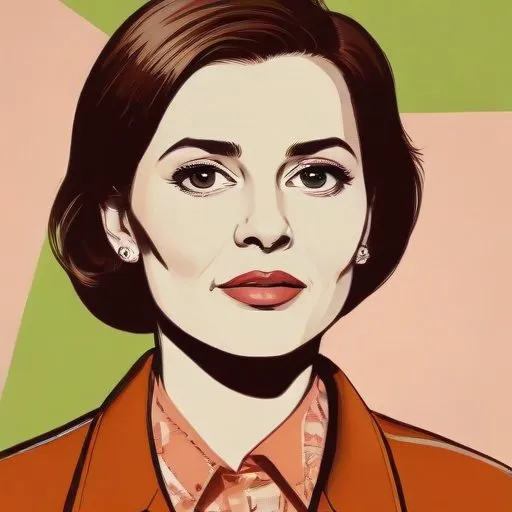
A German-Brazilian zoologist and academic who made significant contributions to the field of malacology, particularly in the study of sea slugs and their anatomy. Her work has greatly advanced our understanding of these marine creatures.
Eveline Du BoisReymond Marcus was a renowned German zoologist and skilled artist, celebrated for her meticulous illustrations and groundbreaking contributions to the field of invertebrate zoology. Her collaborative work with her husband, Ernst Marcus, led to significant discoveries in the study of protozoans, ctenophores, and other invertebrate groups.
Born on October 6, 1901, in Berlin, Germany, Eveline was the youngest daughter of René and Frieda du BoisReymond. Her father, a professor of physiology at Berlin University, sparked her interest in zoology at a young age. She would often observe small animals under her father's microscope, cultivating a fascination with the natural world.
In 1923, Eveline attended zoology courses at Berlin University, where she met Ernst Marcus, a professor of zoology. The two married in 1924, and their union became a fruitful collaboration in the field of zoology. Together, they conducted extensive research on various invertebrate groups, publishing numerous papers and illustrations. Although Eveline's contributions were often uncredited, her artistic talent and scientific acumen were essential to their joint endeavors.
In 1936, following the rise of Nazism in Germany, Ernst Marcus was dismissed from his position, and the couple relocated to São Paulo, Brazil. This move marked a significant shift in their research focus, as they began to study freshwater and land invertebrates, particularly turbellarians, due to their inability to travel to the sea coast during World War II.
After Ernst Marcus's passing in 1968, Eveline continued their research, publishing over 30 papers, primarily on opisthobranch molluscs. Her dedication earned her numerous accolades, including:
Eveline Du BoisReymond Marcus passed away on January 31, 1990, in São Paulo, Brazil, leaving behind a legacy of scientific excellence and artistic beauty.
In recognition of her outstanding contributions, Eveline received several prestigious awards and honors, solidifying her position as a pioneer in the field of zoology.
Throughout her life, Eveline's passion for zoology was matched only by her love for her family and her artistic talent. Her marriage to Ernst Marcus was aunion of love and scientific collaboration, spanning over four decades.
Eveline's work, though focused on invertebrates, has had a lasting impact on our understanding of the natural world. Her illustrations and research have inspired generations of scientists, artists, and enthusiasts alike, contributing to a deeper appreciation for the intricate beauty of the natural world.
Eveline Du BoisReymond Marcus's story is a testament to the power of collaboration, perseverance, and dedication. Her legacy serves as a reminder of the significant contributions women have made to the scientific community, paving the way for future generations of female scientists and artists.
Born in 1834
A German biologist, physician, and philosopher who coined the term "ecology" and made significant contributions to the field of evolutionary biology, including the recapitulation theory.
Born in 1707
Developed the system of binomial nomenclature, which is still used today to classify and name living organisms. This system has had a profound impact on the fields of biology, ecology, and conservation.
Born in 1809
Developed the theory of evolution through natural selection, revolutionizing our understanding of life on Earth. This groundbreaking idea transformed the fields of biology, ecology, and beyond.
Born in 1893
A German zoologist who discovered and described several species of land snails and slugs, making significant contributions to malacology.
