


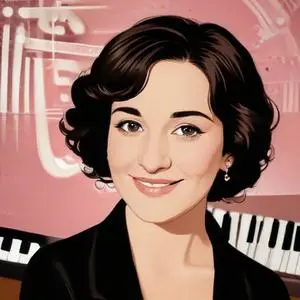
A talented pianist and composer who made significant contributions to the Romantic era, creating over 460 pieces of music, including lieder, choruses, and orchestral works.
Fanny Mendelssohn, a German composer and pianist, is renowned for her extensive contributions to the early Romantic era. Born in 1805, she left an indelible mark on the music world, producing an impressive array of works, including a piano trio, a piano quartet, an orchestral overture, four cantatas, and over 375 pieces for the piano and voice.
Fanny was born in Hamburg, Germany, as the oldest of four children, including her younger brother Felix Mendelssohn, who would also become a renowned composer. She descended from distinguished Jewish families on both sides, with her father, Abraham Mendelssohn, being the son of the philosopher Moses Mendelssohn. Fanny received a thorough musical education from her mother and prominent composers Ludwig Berger and Carl Friedrich Zelter.
Fanny's compositions showcased her exceptional skill and artistry, earning her recognition within her family circle. However, social conventions of the time restricted her opportunities for public performances and publication. Six of her songs were even published under her brother Felix's name, highlighting the challenges she faced as a female composer in a male-dominated era.
In 1829, Fanny married artist Wilhelm Hensel, and the couple had their only child, Sebastian Hensel, in 1830. Despite her family's ambivalence towards her musical ambitions, Fanny continued to compose, eventually publishing a collection of songs as her Opus 1 in 1846.
Fanny Mendelssohn's life and works were largely overlooked until the 1990s, when researchers began to delve deeper into her contributions. In 2010, new analysis of documents corrected the attribution of her Easter Sonata, which had been incorrectly credited to her brother in 1970. The Fanny & Felix Mendelssohn Museum opened in Hamburg, Germany, in 2018, further solidifying her place in music history.
Fanny Mendelssohn's perseverance in the face of adversity serves as an inspiration to women in music and beyond. Her compositions continue to be performed and admired, offering a glimpse into the artistic innovation of the early Romantic era. Her legacy extends beyond her music, too, as a testament to the power of determination and creative expression.
Fanny Mendelssohn's remarkable life and works offer a fascinating glimpse into the early Romantic era. Despite the obstacles she faced, she remained dedicated to her craft, leaving behind a rich legacy that continues to captivate and inspire audiences today.
Born in 1809
A renowned 19th-century musician who masterfully blended classical and romantic styles, creating iconic works like the "Wedding March" and "Elijah" oratorio. His compositions continue to inspire and influence generations of artists.
Born in 1810
A renowned Romantic-era composer and influential music critic, known for his expressive and emotionally charged works, including symphonies, piano music, and art songs.
Born in 1819
A renowned 19th-century pianist and composer, she was one of the first females to achieve recognition in a male-dominated field, creating over 60 pieces of music. Her compositions showcased romanticism and lyricism.
Born in 1833
A renowned pianist and composer, he crafted complex, expressive works that blended traditional and innovative techniques, leaving an indelible mark on classical music.
Born in 1811
A virtuosic pianist and composer who revolutionized classical music with his technically demanding and emotionally expressive works, blending Hungarian folk influences with Romantic-era drama.
Born in 1813
A revolutionary composer who transformed opera with his epic, mythological works, creating a new era of musical storytelling. His iconic operas, such as "Der Ring des Nibelungen," continue to captivate audiences worldwide.
Born in 1813
A renowned composer of iconic operas like La Traviata and Aida, known for his masterful blending of drama and music. His works continue to captivate audiences worldwide.
Born in 1840
A renowned Russian composer and educator, he is best known for his iconic and beloved ballets, such as Swan Lake and The Nutcracker, which continue to enchant audiences worldwide.
