


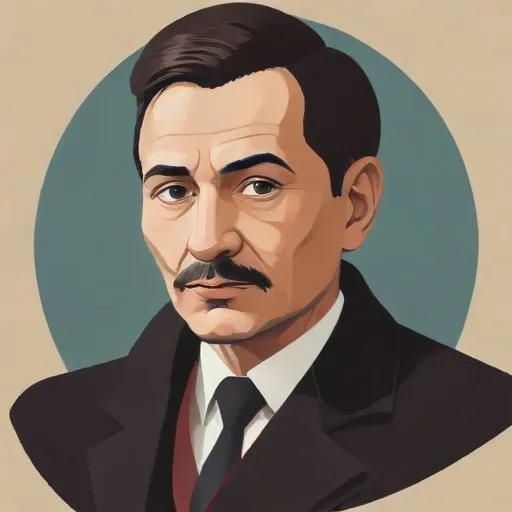
Developed a new approach to quantum field theory, introducing fermionic operators and creating a new mathematical framework for particle physics. His work has had a lasting impact on modern physics and mathematics.
Felix Berezin, a brilliant Soviet Russian mathematician and physicist, is renowned for his groundbreaking contributions to the theory of supersymmetry and supermanifolds, as well as the path integral formulation of quantum field theory. His work has had a profound impact on the field of mathematical physics, shaping the way we understand the fundamental laws of nature.
Berezin was born on April 25, 1931, in Moscow, Russia, to a Jewish family. Despite facing discrimination due to his Jewish heritage, he persevered and earned a degree from Moscow State University. However, he was denied the opportunity to pursue graduate studies at the same institution due to the prevailing anti-Semitic sentiment.
Instead, Berezin spent the next three years teaching at Moscow high schools, where he continued to nurture his passion for mathematical physics under the guidance of Israel Gelfand. This period marked the beginning of his remarkable journey in the world of mathematics and physics.
Berezin's most notable contribution is the development of the Berezin integral, a fundamental concept in quantum field theory that has far-reaching implications for our understanding of supersymmetry and supermanifolds. His work has been instrumental in shaping the field of mathematical physics, and his book, "The Method of Second Quantization," published in 1966, is a testament to his pioneering spirit.
Another significant contribution is the Berezinian, a mathematical construct that has been widely adopted in the field of superanalysis. His work has been cited and built upon by numerous scholars, and his influence continues to be felt in the scientific community.
Berezin's untimely death in 1980, while on a summer trip in the Kolyma region, was a tragic loss to the scientific community. However, his legacy lives on through his work, which has inspired generations of mathematicians and physicists.
His contributions have been recognized through various awards and honors, including the prestigious Soviet Physics Uspekhi Obituary. The mathematical community has paid tribute to his remarkable career, and his work continues to shape the future of mathematical physics.
Felix Berezin's remarkable journey is a testament to the power of human resilience and the pursuit of knowledge. His contributions to mathematical physics continue to inspire and shape the scientific community, ensuring his legacy as one of the greatest mathematicians and physicists of the 20th century.
Born in 1913
A renowned mathematician and biologist who made significant contributions to various fields, including functional analysis, representation theory, and biology, and is known for his work on the theory of distributions and his influence on modern mathematics.
Born in 1921
A Soviet physicist and dissident who advocated for human rights and nuclear disarmament, earning a Nobel Peace Prize in 1975. He's known for his courageous stance against the Soviet regime, promoting peace and democracy.
Born in 1898
Developed quantum mechanics and relativity theories, making significant contributions to our understanding of space and time. His work laid the foundation for modern particle physics and cosmology.
Born in 1908
A renowned physicist and academic who made groundbreaking contributions to our understanding of quantum mechanics, superfluidity, and particle physics, earning a Nobel Prize in Physics in 1962.
Born in 1895
A Soviet physicist who developed the concept of the "tokamak," a device used to confine and study plasmas at extremely high temperatures, leading to advancements in nuclear fusion research.
Born in 1909
Developed mathematical methods for quantum field theory and made significant contributions to the development of theoretical physics, particularly in the areas of statistical mechanics and quantum mechanics.
