


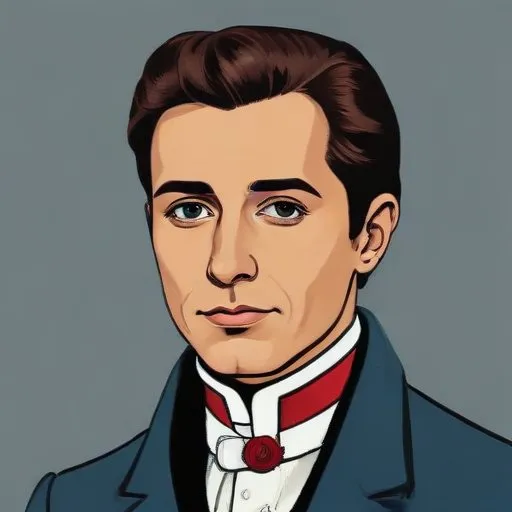
An Italian nobleman who served as the Duke of Mantua and Montferrat, known for his cultural and artistic patronage, particularly in music and architecture.
Ferdinando Carlo Gonzaga, born on August 31, 1652, was the last ruler of the Duchy of Mantua of the House of Gonzaga, a prominent Italian noble family. He is best known for his role in shaping the history of Mantua and Montferrat, as well as his love for music and charitable works.
Ferdinando Carlo was the only child of Duke Charles II of Mantua and Montferrat. In 1665, he received the imperial investiture on the Duchy of Mantua with the ceremony of Coronation at the Cathedral of St. Peter, marking the beginning of his reign.
One of the first acts of his government was to try to curb the abuses that occurred in the collection of court fees. He also implemented a reform of public order in the Duchy, demonstrating his commitment to justice and fairness.
Ferdinando Carlo was a great lover of music, and in 1700, the composer Tomaso Albinoni dedicated his second opera in press to him. This love for music was reflected in his patronage of the arts and his support for artists.
In 1671, Ferdinando Carlo married Anna Isabella Gonzaga, daughter of Ferrante III Gonzaga, sovereign Duke of Guastalla. This marriage was arranged by his aunt, Empress Dowager Eleanor Gonzaga, and brought the rights to the Duchy of Guastalla and Luzzara to the Mantua line of the Gonzaga dynasty.
During his reign, the duchy of Mantua experienced a period of development and autonomy, which aroused the suspicions of Spain. This led to a suspension of payment of the annual contribution of 50,000 crowns and the garrison of Casale, provoking the wrath of the Duke of Mantua.
Frustrated by the Austrians in the conquest of Guastalla, Ferdinando Carlo concluded a pact with Louis XIV of France on December 8, 1678, selling Casale. This decision was facilitated by his minister, Count Ercole Antonio Mattioli, who might have become the Man in the Iron Mask.
Ferdinando Carlo's decision to sell Casale was a controversial one, and it marked the beginning of the end of the Duchy of Mantua's independence. Despite this, his legacy as a ruler who cared for his people and promoted the arts remains.
Ferdinando Carlo Gonzaga's life was marked by his love for music, his commitment to justice, and his controversial decisions as a ruler. Despite the challenges he faced, he remains an important figure in the history of Mantua and Montferrat.
Born in 1503
The first Habsburg to rule the Holy Roman Empire, he unified Austria and introduced the concept of a hereditary monarchy, shaping European politics for centuries to come.
Born in 1500
Ruling over a vast empire from 1519 to 1556, he was a powerful and influential leader who played a crucial role in shaping European politics and religion. He is most known for his efforts to unify Christian Europe and defend it against the Ottoman Empire.
Born in 1503
The first Habsburg to rule the Holy Roman Empire, he unified Austria and introduced the concept of a hereditary monarchy, shaping European politics for centuries to come.
