


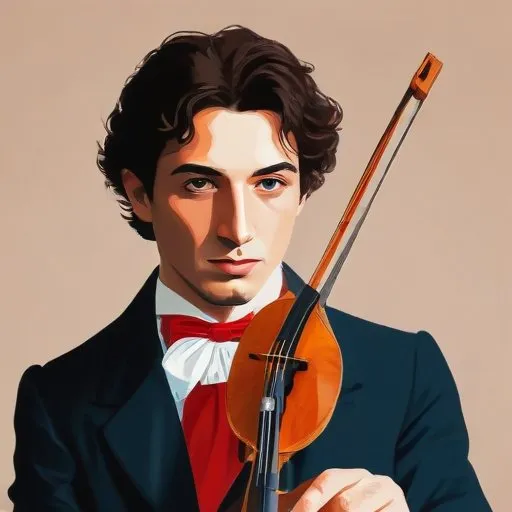
A renowned Baroque composer and virtuosic violinist, known for his concertos and operas that showcased his mastery of harmony and melody. His famous Adagio in G minor is a staple of classical music.
Tomaso Albinoni is renowned for his exquisite instrumental compositions, particularly his concertos, which have captivated audiences for centuries. Although he was a prominent opera composer in his time, it is his instrumental works, especially the hauntingly beautiful Adagio in G minor, that have endured as his lasting legacy.
Born on June 8, 1671, in Venice, Italy, Tomaso Albinoni was the son of Antonio Albinoni, a wealthy paper merchant. He received his early music training in violin and singing, laying the foundation for his future career as a composer.
In 1694, Albinoni dedicated his Opus 1 to Cardinal Pietro Ottoboni, a prominent Venetian nobleman. This marked the beginning of his rise to fame as a composer. His first opera, Zenobia, regina de' Palmireni, premiered in Venice the same year, cementing his reputation as a talented young composer.
Albinoni's instrumental music, particularly his concertos and sonatas, showcased his innovative approach to composition. He experimented with new forms and techniques, pushing the boundaries of Baroque music. His Opus 3 collection of instrumental pieces, published in 1701, was hugely popular and dedicated to Ferdinando de Medici, Grand Prince of Tuscany.
In 1705, Albinoni married Margherita Rimondi, and the couple had no children. Although he held no official position at San Marco, a prestigious musical institution in Venice, he maintained a close relationship with its maestro di cappella, Antonino Biffi. Albinoni's career took him to various Italian cities, where he composed music for opera houses and nobility.
Albinoni's instrumental music has had a profound impact on the development of classical music. His concertos, particularly the Adagio in G minor, have become staples of classical music repertoire. Despite being attributed to him, the Adagio was largely written by Remo Giazotto, a 20th-century musicologist, who discovered and arranged Albinoni's manuscripts.
Albinoni's music has inspired generations of composers, from Johann Sebastian Bach to modern film score composers. His innovative approach to instrumental composition has left an indelible mark on classical music, ensuring his legacy continues to inspire and delight audiences worldwide.
Today, Tomaso Albinoni is remembered as a master of Baroque instrumental music, whose works continue to captivate audiences with their beauty, elegance, and emotional depth.
Born in 1678
A virtuosic violinist and prolific composer, he crafted over 400 concertos, including "The Four Seasons," which remains a beloved and iconic masterpiece of classical music.
Born in 1685
A master of Baroque music, he composed over 1,000 works, including orchestral suites, cantatas, and passions, that still inspire and influence musicians today. His innovative use of counterpoint and harmony raised the bar for classical music.
Born in 1685
A renowned Baroque composer and organist, famous for creating majestic orchestral suites, operas, and oratorios, including the iconic "Messiah" masterpiece.
Born in 1653
A virtuosic violinist and composer who revolutionized the concerto grosso form, creating a new era of classical music. His influential works elevated the violin to a solo instrument, shaping the course of Western classical music.
Born in 1685
A virtuosic harpsichordist and composer, renowned for crafting over 550 sonatas that showcased his innovative and expressive style, blending Italian and Portuguese influences. 42
Born in 1782
A virtuosic violinist and composer who revolutionized the instrument's technical possibilities, leaving an indelible mark on classical music.
Born in 1692
A virtuosic violinist and composer who wrote over 150 concertos and sonatas, known for his technically demanding and expressive works that showcased his mastery of the instrument.
Born in 1660
Baroque-era mastermind behind over 600 cantatas, operas, and orchestral works, shaping the course of classical music with his innovative style and harmonic genius.
