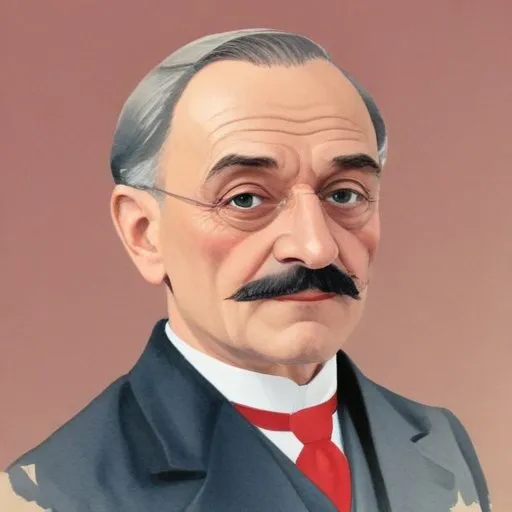
Ferenc Toldy: The Pioneering Literary Critic of the Austrian Empire
A Life Dedicated to Hungarian Literature
Ferenc Toldy, born Franz Karl Joseph Schedel on August 10, 1805, was a renowned literary critic and scholar from the Austrian Empire and later Austria-Hungary. He is best known for his influential works on Hungarian poetry and literature, which helped shape the country's literary identity.
Early Life and Education
Toldy was born in Buda, Hungary, to Franz Schedel and Josepha Thalherr. He spent his early years in Cegld, where he received his primary education. Later, he pursued medicine and practiced as a doctor in Pest, but his true passion lay in literature.
The Emergence of a Literary Critic
In 1828, Toldy published his first significant work, a handbook on Hungarian poetry, which marked the beginning of his illustrious career as a literary critic. This publication not only showcased his expertise but also demonstrated his dedication to promoting Hungarian literature.
Travels and Academic Pursuits
Toldy's travels to Berlin, London, and Paris broadened his cultural and literary horizons, further solidifying his credentials as a scholar. Upon his return to Hungary in 1830, he became a professor of dietetics at Pest University, a position he held until 1844. During this period, he also co-founded the Kisfaludy Society in 1836, an organization dedicated to promoting Hungarian literature and culture.
Academic Distinctions and Honors
Toldy's academic prowess earned him numerous distinctions, including his appointment as Secretary of the Hungarian Academy in 1835, a position he held until 1861. He later became a Professor of Hungarian Literature, a role that cemented his authority in the field.
Lasting Contributions to Hungarian Literature
Toldy's most influential works were published during the 1850s and 1860s, leaving an indelible mark on Hungarian literature. His scholarship and critiques not only shaped the country's literary identity but also contributed significantly to its cultural heritage.
Legacy and Tributes
Toldy's legacy extends beyond his academic achievements. A high school in Budapest, the Toldy Ferenc Gimnazium, was named in his honor, recognizing his contributions to Hungarian education and culture. Additionally, the Cegldi Toldy Ferenc Hospital in Cegld, his hometown, bears his name, serving as a testament to his enduring impact on Hungarian society.
Conclusion
Ferenc Toldy's remarkable life and achievements serve as a testament to his unwavering commitment to Hungarian literature and culture. As a pioneering literary critic, he left an indelible mark on the country's academic and cultural landscape, ensuring his legacy continues to inspire future generations of scholars and literary enthusiasts.
FAQ
Who was Ferenc Toldy, the Hungarian historian and critic?
Ferenc Toldy was a Hungarian historian and literary critic who made significant contributions to the study of Hungarian literature and history. He was a key figure in the development of Hungarian romanticism.
What was Ferenc Toldys contribution to Hungarian literature?
Toldys work focused on Hungarian literature and history, and he wrote several influential studies on the subject. He was particularly interested in the romantic movement and its impact on Hungarian culture.
How did Ferenc Toldy influence the development of Hungarian historiography?
Toldys historical studies helped to shape the development of Hungarian historiography, providing a new perspective on the countrys past and its cultural heritage.
What was Ferenc Toldys relationship with the Hungarian Academy of Sciences?
Toldy was a member of the Hungarian Academy of Sciences and played a key role in its development. He was a respected authority on Hungarian literature and history, and his work was widely recognized.
Is Ferenc Toldy considered a prominent figure in Hungarian cultural history?
Yes, Ferenc Toldy is considered a prominent figure in Hungarian cultural history, known for his influential studies on literature and history. He played a significant role in shaping the countrys cultural identity.