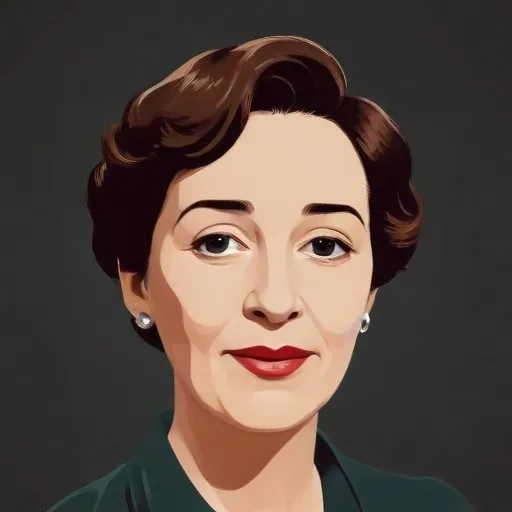
Dame Flora Robson: The Theatrical Icon of Emotional Intensity
A Legendary Actress of Stage and Screen
Dame Flora Robson was an English actress renowned for her electrifying performances in plays and films that demanded dramatic and emotional intensity. From queens to murderesses, her range extended far and wide, captivating audiences with her powerful presence on both stage and screen.
Early Life and Education
Born on March 28, 1902, in South Shields, County Durham, Robson was the daughter of David Robson and Eliza Robson (née McKenzie), both of Scottish descent. She was the youngest of seven siblings, with many of her forebears being engineers, mostly in shipping. Her father, a ships engineer, moved the family to Palmers Green in 1907 and later to Southgate in 1910, both in north London, and eventually to Welwyn Garden City. Robson was educated at the Palmers Green High School and the Royal Academy of Dramatic Art, where she won a bronze medal in 1921.
A Talent Discovered
Robson's father discovered her talent for recitation at the tender age of five, and soon she was being taken around by horse and carriage to recite and compete in recitations. This early start established a pattern that remained with her throughout her life.
Early Career and Breakthrough
Robson made her stage debut in 1921, and by the 1930s, she was appearing in several prominent films in both the UK and Hollywood. She shared the screen with legendary actors like
Laurence Olivier,
Paul Muni, and
George Raft. One of her most notable roles was that of Queen Elizabeth I in both
Fire Over England (1937) and
The Sea Hawk (1940).
Awards and Nominations
Robson was nominated for the Academy Award for Best Supporting Actress for her role as Angelique Buiton, a servant, in
Saratoga Trunk (1945). Her hypnotic performance as Ftatateeta, the nursemaid and royal confidante and murderess-upon-command to
Vivien Leigh's Queen Cleopatra in the screen adaptation of
George Bernard Shaw's
Caesar and Cleopatra (1945) is still remembered today.
Legacy and Impact
After the Second World War, Robson demonstrated her remarkable range by appearing in
Holiday Camp (1947). Throughout her career, she inspired countless actresses with her emotional intensity and powerful performances. Robson's remarkable life and work continue to captivate audiences, earning her a place as one of the most iconic actresses of the 20th century.
Personal Milestones and Key Life Events
- 1934: Played the Empress Elizabeth in Alexander Korda's The Rise of Catherine the Great.
- 1945: Nominated for the Academy Award for Best Supporting Actress for her role in Saratoga Trunk.
- 1947: Appeared in Holiday Camp, demonstrating her range as an actress.
Philosophical Contributions and Beliefs
Robson's commitment to her craft and her ability to convey emotional intensity on stage and screen inspired generations of actresses. Her legacy serves as a reminder of the importance of dedication, hard work, and passion in the pursuit of artistic excellence.
Cultural Significance and Historical Context
Robson's remarkable career spanned several decades, during which she navigated the challenges of the film industry and the theater world. Her performances continue to be celebrated for their emotional depth, complexity, and nuance, making her an icon of British cinema and theater.
FAQ
What was Flora Robsons most notable film role?
Flora Robson, an English actress, is best known for her Academy Award-nominated performance as Queen Elizabeth I in the 1937 film Fire Over England.
What was Flora Robsons early career like?
Robson began her acting career on the stage, performing with various repertory companies and later joining the Royal Shakespeare Company, where she honed her craft and developed her unique acting style.
What awards did Flora Robson win for her performances?
Robson won the Volpi Cup for Best Actress at the 1933 Venice Film Festival for her performance in The Private Life of Henry VIII, and was nominated for an Academy Award for Best Supporting Actress for her role in Saratoga Trunk.
What was Flora Robsons approach to acting?
Robson was known for her intense preparation and immersion into her roles, which earned her critical acclaim and recognition from her peers.
How did Flora Robson contribute to the British film industry?
Flora Robsons talent and dedication helped raise the profile of British cinema, and her performances continue to be celebrated as some of the greatest in British film history.