


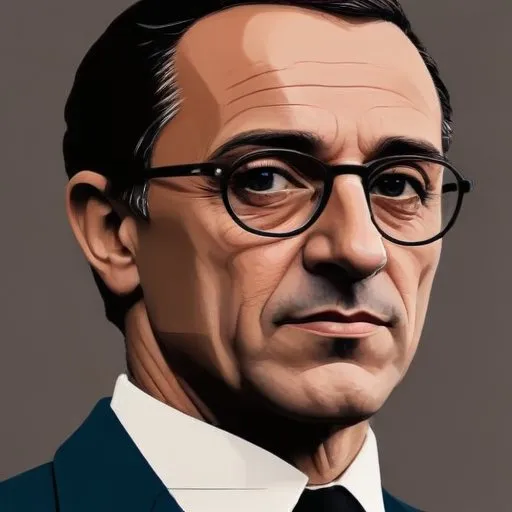
Designed fortifications and buildings in Malta, including the capital city Valletta, which is now a UNESCO World Heritage Site.
Francesco Laparelli, a 16th-century Italian architect, is renowned for designing and building the fortified city of Valletta in Malta. As an assistant to Michelangelo and a commissioned architect of the Pope, Laparelli's work had a profound impact on the architectural landscape of the Mediterranean.
Born in Cortona, Italy on April 5, 1521, Laparelli hailed from a prominent family. He developed a passion for mathematics, architecture, and drawing, drawing inspiration from the works of Euclid and Vitruvius. His encounter with Gabrio Serbelloni, sent by Cosimo I de' Medici, further shaped his architectural vision.
In 1560, Laparelli was summoned to Rome by Pope Pius IV to restore the fortifications of Civitavecchia. He subsequently designed fortifications for the new mouth of the Tiber and directed defense works at Vatican Hill in 1561. His collaboration with Michelangelo Buonarroti on St. Peter's Basilica and his contributions to the stability of the dome further solidified his reputation as a master architect.
Following the devastating Great Siege of Malta in 1565, the Grand Master Jean Parisot de la Valette sought to rebuild the island's defenses. Laparelli was commissioned by Pope Pius V to design and construct a new fortress on Mount Sciberras. He arrived in Malta in December 1565 and presented his report to the knights on January 3, 1566. Laparelli's vision for Valletta would become a testament to his innovative and defensive architectural style.
Laparelli's work in Valletta not only redefined the island's defenses but also left an indelible mark on modern architectural design. His use of bastioned fortifications and urban planning principles has influenced architects and engineers for centuries. Today, Valletta stands as a UNESCO World Heritage Site, a testament to Laparelli's groundbreaking vision.
Francesco Laparelli's remarkable life's work continues to inspire awe and admiration. As an architect, innovator, and visionary, his contributions to the world of architecture remain unparalleled.
Born in 1475
Renaissance master of iconic works like the ceiling of the Sistine Chapel, creating breathtakingly beautiful and emotionally powerful art that continues to inspire and awe.
Born in 1452
Renaissance mastermind behind iconic works like the Mona Lisa and The Last Supper, who revolutionized art, science, and engineering with his inventive and curious nature.
Born in 1598
A renowned Baroque master who crafted exquisite sculptures and paintings that captivated 17th-century Rome, leaving an indelible mark on the art world.
Born in 1599
A Baroque mastermind who crafted iconic Roman churches, blending dramatic curves and geometric precision to create awe-inspiring spaces.
Born in 1596
A prominent Baroque painter who created elaborate, dramatic, and emotive works that adorned the ceilings of Roman palaces and churches, influencing the development of 17th-century art.
Born in 1508
A renowned Renaissance architect and theorist, famous for designing iconic buildings that harmoniously blend classical and modern elements, including a majestic church and a historic theater.
