


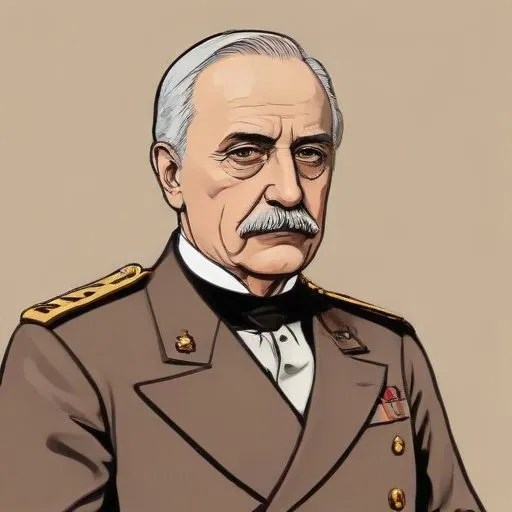
A British army officer and Member of Parliament, known for his military service in India and his role in the British East India Company.
Francis Cecil Campbell Balfour, a British military officer and colonial administrator, is remembered for his exemplary service in various capacities, including his role in the Sudan Political Service, his bravery during World War I, and his administrative tenure in Sudan's provinces. Balfour's impressive career spanned over three decades, earning him numerous accolades and honors.
Born on December 8, 1884, to Colonel Eustace Balfour and Lady Frances Campbell, Francis Balfour was a nephew of Arthur Balfour, the Prime Minister of the United Kingdom from 1902 to 1905. He received his education at Eton College, laying the foundation for his future endeavors.
Balfour's professional journey began in 1906 when he joined the public works department of the Anglo-Egyptian Sudan. His exceptional work caught the attention of Governor-General Reginald Wingate, who intervened to secure his appointment to the Sudan Political Service in 1912.
Balfour's outstanding service was recognized through various honors and awards, including:
Francis Balfour passed away on April 16, 1965, at the age of eighty, leaving behind a legacy of dedication and service. His remarkable career serves as a testament to his commitment to his country and the people he served.
Balfour's life and career were shaped by the events of the early 20th century, including World War I and the subsequent reorganization of colonial administrations. His experiences in Sudan and India provide valuable insights into the complexities of colonial rule and the challenges faced by administrators during that era.
Through his administrative and military roles, Balfour contributed significantly to the development of the regions he served. His legacy serves as a reminder of the importance of dedicated public service and the impact that individuals can have on the course of history.
Born in 1871
Prolific writer of historical novels and adventure stories, also a talented landscape painter.
Born in 1863
A Welsh lawyer and politician who served as Prime Minister of the United Kingdom, leading the country through World War I and introducing key social reforms. He's known for his charismatic leadership and progressive policies.
Born in 1852
A British Prime Minister who led the country through the early years of World War I, known for his role in shaping the country's war effort and introducing reforms like women's suffrage.
Born in 1858
A Canadian-Scottish banker and politician who served as Prime Minister of the United Kingdom during World War I, known for his leadership during wartime and his role in shaping British politics.
Born in 1836
A British businessman and politician who played a key role in shaping the British Empire's colonial policies, particularly in Africa, and is known for his advocacy of imperialism and tariff reform.
