


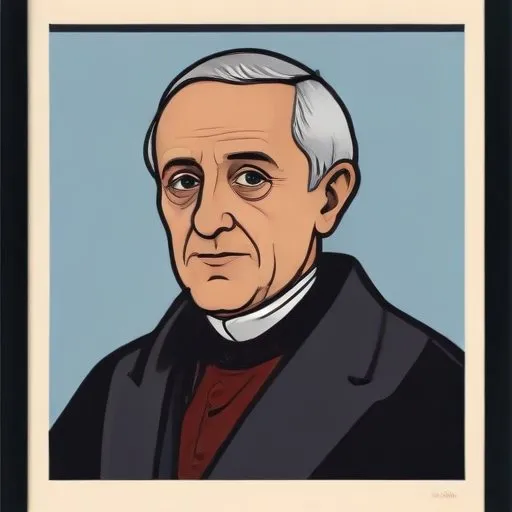
An 18th-century historian and topographer who wrote extensively on the history and antiquities of Norfolk, England, producing a monumental work in 11 volumes. His writings remain a valuable resource for local historians and genealogists.
Francis Blomefield, an English antiquarian, is renowned for his monumental work, "An Essay Towards a Topographical History of the County of Norfolk," a meticulous account of Norfolk's history, geography, and culture. Although he didn't live to complete the project, his friend Rev. Charles Parkin took up the mantle, ensuring the publication of this invaluable resource.
Born on July 23, 1705, in the parish of Fersfield, Norfolk, Francis Blomefield was the eldest son of Henry Blomefield and Alice Batch. His family, with roots in Fersfield for at least six generations, claimed descent from Sir Henry Broumflete, a delegate to the Council of Basle in 1433.
Blomefield's educational pursuits took him to the grammar schools at Diss and Thetford in Norfolk, followed by admission to Caius College, Cambridge, in April 1724. He graduated with a Bachelor of Arts degree in 1727 and a Master of Arts degree in 1728.
Ordained a priest on July 27, 1729, by Thomas Tanner, Chancellor of the Diocese of Norwich, Blomefield's clerical career was intertwined with his writing. As the rector of Fersfield, he dedicated himself to researching and documenting the history of Norfolk.
His magnum opus, "An Essay Towards a Topographical History of the County of Norfolk," is a testament to his tireless efforts. The work, which he began in the 1730s, comprises detailed accounts of the City of Norwich, the Borough of Thetford, and all parishes in the southernmost Hundreds of Norfolk. Although incomplete at the time of his death, Rev. Charles Parkin ensured its publication.
Blomefield's work was reissued in London between 1805 and 1810, in 11 volumes, with the last seven volumes completed by Parkin. This monumental work cemented his reputation as a pioneering antiquarian and historian.
Walter Rye, a Norfolk historian, described Blomefield as a gentleman of independent means, who closely resembled the astronomer John Flamsteed. Rye's observation was later immortalized on the frontispiece of one of Blomefield's volumes, using Flamsteed's portrait as a likeness.
In 1729, Blomefield presented his son to the advowson of Fersfield, a testament to his family's long-standing connection to the parish. His mother, Alice Batch, was the daughter and heiress of John Batch of Kings Lynn in Norfolk.
Francis Blomefield's life was cut short when he passed away on January 16, 1752. Despite his untimely death, his work continues to inspire and inform historians, researchers, and enthusiasts alike, ensuring his legacy as a champion of Norfolk's rich history.
Born in 1551
Renowned for meticulously documenting England's antiquities and historical sites, this 16th-century scholar authored Britannia, a seminal work that shaped the country's understanding of its past.
Born in 1502
A 16th-century scholar who wrote influential works on English language and literature, particularly his "Itinerary" that described England's antiquities and topography.
Born in 1605
A renowned expert in tracing family lineages and recording historical events, particularly in medieval England, leaving behind a vast collection of manuscripts and publications.
Born in 1626
A 17th-century pioneer in antiquarian studies, collecting and preserving historical records, and making significant contributions to the fields of archaeology, architecture, and biography.
Born in 1632
A 17th-century antiquarian who wrote extensively on Oxford University's history and architecture, preserving valuable records of the institution's past.
Born in 1674
A 17th-century Anglican bishop who served as the Bishop of St Asaph and wrote several theological works, including a notable commentary on the Bible. He was a prominent figure in the Church of England during the Restoration period.
