


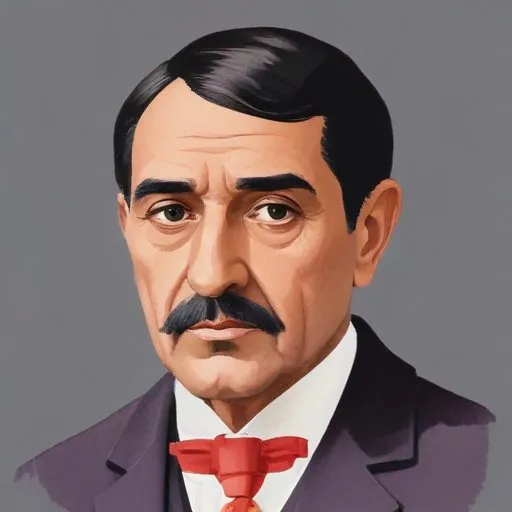
A Spanish sociologist, author, and translator who wrote extensively on topics like politics, culture, and philosophy, and was also a prominent figure in the Spanish Resistance against fascism.
Francisco Ayala was a renowned Spanish writer, philosopher, and academic, best known as the last representative of the Generation of 27, a literary movement that revolutionized Spanish literature in the 20th century. With a career spanning over six decades, Ayala left an indelible mark on the world of letters, shaping the course of Spanish literature and philosophy.
Ayala was born on March 16, 1906, in Granada, Spain. At the age of 16, he moved to Madrid, where he studied Law and Humanities. During this period, he published his first two novels, Tragicomedia de un hombre sin espíritu (Tragicomedy of a Spiritless Man) and Historia de un amanecer (A Sunrise Tale).
Ayala obtained a Ph.D. in Law from the Universidad de Madrid, where he later became a teacher. In 1929, a postgraduate grant enabled him to pursue further studies in philosophy and sociology in Berlin. It was during this period that he witnessed the rise of Nazism and met his future wife, Etelvina Silva Vargas, a Chilean national.
At the outbreak of the Spanish Civil War, Ayala's father and younger brother were killed by the Nationalists. He went into exile in Buenos Aires, where he spent ten years. During this time, he contributed to various literary magazines, including Sur and Gaceta Literaria, and founded the magazine Realidad with fellow Spaniard Lorenzo Luzuriaga.
In the 1950s, Ayala moved to Puerto Rico, where he taught at the Law school of the University of Puerto Rico. He later taught Spanish Literature at various American universities, including Princeton, Rutgers, New York, and Chicago. Despite his exile, Ayala maintained a strong connection with Puerto Rico, where he befriended notable figures such as Pablo Casals and Juan Ramón Jiménez.
Ayala's literary and philosophical contributions have had a lasting impact on Spanish literature and culture. His novels, which often explored themes of existentialism and social critique, continue to be widely read and studied. His academic pursuits and teaching career have inspired generations of scholars and students.
"The writer's duty is to represent the invisible, to make the unknown known, and to reveal the hidden."
"Literature is not just a reflection of reality, but a creator of reality."
| 1906 | Born in Granada, Spain |
| 1929 | Studies philosophy and sociology in Berlin |
| 1931 | Marries Etelvina Silva Vargas |
| 1939 | Goes into exile in Buenos Aires |
| 1950s | Teaches at the University of Puerto Rico |
| 1960 | Returns to Spain |
| 2009 | Passes away at the age of 103 |
Ayala's remarkable life and career serve as a testament to his unwavering dedication to literature, philosophy, and education. His legacy continues to inspire and influence generations of writers, scholars, and thinkers.
Born in 1883
A Spanish philosopher, author, and critic who explored the human condition, culture, and the role of the individual in society, known for his concept of "mass man" and the "revolt of the masses".
Born in 1864
A Spanish philosopher and author who explored the human condition, faith, and the search for meaning in life, creating influential works that continue to resonate with readers today.
Born in 1899
A visionary writer who crafted intricate, philosophical tales that blurred reality and fantasy, influencing generations of authors and thinkers. 82
99 Years Old
A Colombian journalist and author who crafted magical realism, a literary style that blends fantasy and reality, and won the Nobel Prize in Literature in 1982. His works are known for their vivid storytelling and exploration of human experience.
90 Years Old
A Nobel Prize-winning writer and politician who explored the complexities of Peruvian society through his novels and essays, and later ran for president. His works often blended politics, history, and fiction.
Born in 1909
A Latvian-English historian and philosopher who explored the intersection of philosophy, history, and politics, and is renowned for his work on the Enlightenment, liberty, and the nature of humanity.
Born in 1874
A philosopher who developed the concept of "symbolic forms" to understand human culture and knowledge, and is known for his work on the philosophy of science and the Enlightenment.
Born in 1893
A Hungarian-English sociologist and academic who developed the concept of "sociology of knowledge," which explores how social and cultural factors shape our understanding of reality. He's also known for his work on the sociology of youth and the role of intellectuals in society.
