


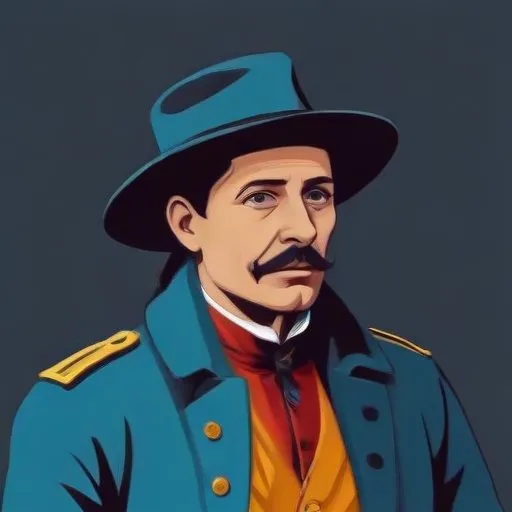
Pioneering explorer and academic who mapped Patagonia and discovered Mount Fitz Roy, contributing significantly to the region's geography and anthropology.
Francisco Moreno, affectionately known as Perito Moreno, was a renowned Argentine explorer and academic who played a pivotal role in the incorporation of Patagonia into Argentine territory. He is credited with discovering and mapping numerous uncharted regions, including Lake Nahuel Huapi, Lake Argentino, and Mount Fitz Roy, earning him a reputation as one of the most influential figures in Argentine history.
Born on May 31, 1852, in Buenos Aires, Argentina, Moreno was raised in a traditional patrician family. He developed an early interest in natural history, often accompanying his father on searches for artifacts and fossils. By the age of 14, he had already created a homemade museum showcasing his extensive collections.
Moreno's first major expedition took place in 1875, when he surveyed the Ro Negro Territory, largely uncharted at the time. This expedition marked the beginning of his journey to explore and map Patagonia. In January 1876, he reached Lake Nahuel Huapi in the southern Andes, and on February 15, 1877, he discovered and named Lake Argentino.
His expeditions continued, and on March 2, 1877, he discovered and named Mount Fitz Roy, after the commander of the expedition of HMS Beagle in the 1830s. The native Tehuelche people also referred to it as Chalten.
During his expeditions, Moreno encountered several native tribes, including the Tehuelche. In 1880, he was taken prisoner by a Tehuelche tribe and condemned to death. However, he managed to escape on March 11, just one day before his scheduled execution.
During this period, he met the Tehuelche chief, Inacayal, who was hospitable to him. Later, Inacayal led a resistance to the Argentine government's efforts to incorporate Patagonia into its territory.
Moreno's contributions to the field of exploration and natural history are immense. He was a founding member of the Argentine Scientific Society and played a crucial role in the country's incorporation of Patagonia. His discoveries and mappings of the region paved the way for further exploration and development.
Moreno's personal life was marked by his dedication to his work. He remained unmarried and childless, devoting himself entirely to his expeditions and scientific pursuits.
Today, Moreno is remembered as a pioneering figure in Argentine history, and his name is synonymous with exploration, discovery, and adventure.
Born in 1906
A Nobel Prize-winning biochemist who discovered the mechanism of sugar nucleotides, revolutionizing our understanding of carbohydrate metabolism. His work has had a lasting impact on glycobiology and medicine.
Born in 1887
A pioneering physiologist who discovered the role of pituitary hormones in regulating blood sugar levels, earning him a Nobel Prize in Physiology or Medicine. His work laid the foundation for modern endocrinology.
Born in 1852
Pioneering neuroscientist and pathologist who discovered the structure of neurons and pioneered the field of neuroscience, earning a Nobel Prize in Physiology or Medicine in 1906.
Born in 1914
A pioneering figure in magical realism, blending fantastical elements with everyday life in his novels and short stories, exploring the human condition and social commentary.
