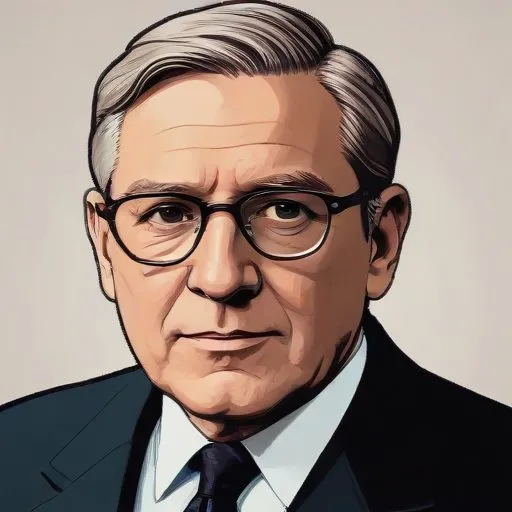
Frank Church: The Liberal Lion of Idaho
A Champion of Environmental Conservation and Foreign Policy
Frank Church, a Democrat from Idaho, is best known for his remarkable tenure as a U.S. Senator from 1957 to 1981, earning the distinction of being the longest-serving Democratic senator from the state. During his time in office, he established himself as a leading figure in American foreign policy and a champion of environmental conservation, leaving an indelible mark on the country's politics and natural heritage.
Early Life and Education
Born on July 25, 1924, in Boise, Idaho, Frank Church grew up in a family with a strong sense of public service. He enrolled at Stanford University in 1942 but interrupted his studies to enlist in the Army during World War II. As a military intelligence officer in the China-Burma-India Theater, Church served his country with valor. After the war, he returned to Stanford Law School, earning his law degree in 1950. He then returned to Boise to practice law and became an active member of the Democratic Party in Idaho.
A Rising Star in Politics
Church's political career began with an unsuccessful bid for a seat in the Idaho state legislature in 1952. Undeterred, he continued to build his reputation as a skilled lawyer and dedicated public servant. In 1956, he ran for the United States Senate, defeating incumbent Herman Welker in the general election. This marked the beginning of his remarkable 24-year tenure in the Senate.
Leadership and Legacy
As a senator, Church was a protégé of Senate Majority Leader
Lyndon B. Johnson and served on the Senate Committee on Foreign Relations. In 1960, he gave the keynote speech at the Democratic National Convention, catapulting him to national prominence. Church was a strong advocate for progressive causes, particularly environmental conservation. He played a crucial role in the creation of a system of protected wilderness areas, earning him the respect and admiration of environmentalists across the country.
A Critic of the Vietnam War
Despite initially supporting the Vietnam War, Church became increasingly critical of the conflict. In 1970, he co-authored the Cooper-Church Amendment, which sought to curtail the war. He further demonstrated his commitment to ending the conflict by co-authoring the Case-Church Amendment in 1973. Church's courageous stance on the Vietnam War solidified his reputation as a champion of progressive values.
The Church Committee
In 1975, Church chaired the Senate Select Committee to Study Governmental Operations with Respect to Intelligence Activities, commonly known as the Church Committee. This committee's work laid the groundwork for the Foreign Intelligence Surveillance Act of 1978, a landmark legislation that reformed the government's intelligence gathering practices.
Awards and Honors
Throughout his career, Church received numerous awards and honors for his dedication to public service. He was awarded the Sierra Club's
John Muir Award in 1973 for his environmental advocacy. In 1979, he received the Albert Lasker Public Service Award for his dedication to social justice and human rights.
Personal Life and Legacy
Frank Church passed away on April 7, 1984, leaving behind a legacy of service, compassion, and dedication to the environment. His contributions to American foreign policy, environmental conservation, and social justice continue to inspire generations of leaders and citizens alike. As a testament to his enduring impact, the Frank Church-River of No Return Wilderness Area in Idaho was named in his honor, a fitting tribute to a life of remarkable public service.
Quotes and Memorable Sayings
- "The time has come to reassert the moral authority of the United States in the world."
- "We must recognize that our environmental problems are not limited to our own borders, but are global in scope."
Church's inspiring words and unwavering commitment to progress continue to motivate Americans to work towards a better future for all.
FAQ
What are Frank Churchs contributions to American politics?
Frank Church was a dedicated public servant who made significant contributions to American politics. He served as a US Senator from Idaho for 24 years, chairing the Church Committee, which investigated CIA and FBI abuses of power. His work led to the establishment of the Foreign Intelligence Surveillance Act.
What is Frank Churchs role in the Church Committee?
Frank Church chaired the Church Committee, a Senate committee that investigated CIA and FBI abuses of power in the 1970s. The committees findings led to significant reforms and increased oversight of the US intelligence community.
What are some notable legislation passed by Frank Church?
Frank Church sponsored or co-sponsored several notable pieces of legislation, including the Foreign Intelligence Surveillance Act, the Foreign Assistance Act, and the National Forest Management Act. His work helped shape US foreign policy, environmental conservation, and intelligence gathering.
What is Frank Churchs legacy in Idaho politics?
Frank Church was a beloved figure in Idaho politics, serving as a US Senator for 24 years. He was known for his commitment to environmental conservation, education, and healthcare. His legacy continues to inspire Idahoans to engage in public service.
Did Frank Church have any notable awards or honors?
Frank Church received several awards and honors for his public service, including the Albert Lasker Public Service Award, the Conservationist of the Year Award, and the Hubert H. Humphrey Award. He was also awarded honorary degrees from several universities.