


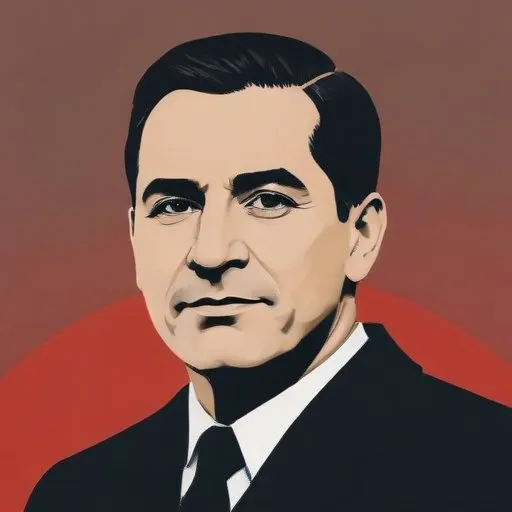
The 45th Mayor of Chicago, serving from 1931 to 1933, known for his efforts to reform the city's government and tackle organized crime during the Prohibition era.
Frank J. Corr, a prominent American politician, is best known for serving as the 45th mayor of Chicago, Illinois, albeit in an acting capacity, following the assassination of Anton Cermak in 1933. During his brief tenure, Corr navigated the complexities of municipal governance, ensuring the city's administrative machinery remained functional until a permanent replacement could be elected.
Born on January 12, 1877, in Brooklyn, New York, Corr's family relocated to Chicago in 1889. He graduated from Chicago-Kent College of Law in 1899 and was admitted to the bar, practices law in Chicago. This marked the beginning of his long association with the city and its politics.
In 1902, Corr was appointed assistant corporation counsel for Chicago, a position he held until he briefly left to become a law partner to Judge Walter T. Stanton. He returned to the counsels office during the administration of Mayor William Dever. This exposure to municipal politics laid the foundation for his future role as alderman and, eventually, mayor.
In 1931, Corr was elected alderman of Chicago's 17th Ward, a position he held until the assassination of Mayor Anton Cermak in March 1933. Following Cermak's demise, Corr was appointed acting mayor, serving from March 15, 1933, to April 8, 1933. Although he lacked the authority to sign tax warrants, limiting salary payments for city and school employees, Corr worked diligently to ensure a smooth transition of power.
Frank J. Corr's tenure as acting mayor, though brief, highlights his commitment to public service. At the time of his death on June 3, 1934, Corr was serving as alderman and running for re-election. His legacy as a dedicated public servant continues to inspire future generations of Chicagoans.
Frank J. Corr's life and legacy serve as a testament to his dedication to public service and his ability to navigate the complexities of municipal governance, even in times of crisis.
Born in 1902
The 48th Mayor of Chicago, a dominant figure in American politics, known for his strong leadership and machine-style politics that shaped the city's development. He played a crucial role in the 1968 Democratic National Convention.
Born in 1873
A Czech-American captain and politician who served as the 44th Mayor of Chicago, known for his strong leadership and efforts to reform the city's government. He's also infamous for being assassinated in 1933, allegedly in an attempt to kill President-elect Franklin D. Roosevelt.
Born in 1555
A 16th-century occultist who claimed to communicate with angels and demons, revealing cryptic messages and prophecies that fascinated European nobility and intellectuals.
Born in 1693
A skilled craftsman who revolutionized navigation by inventing the marine chronometer, a precise clock that helped sailors determine their longitude at sea. This innovation transformed ocean travel and exploration.
Born in 1866
The 39th Mayor of Chicago, serving from 1907 to 1911, is known for his progressive reforms and efforts to clean up city government. He's also remembered for his role in the 1910 Chicago River reversal project.
