


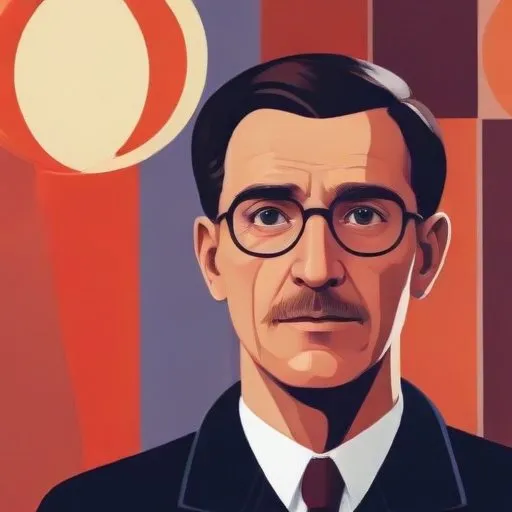
A pioneer in Canadian astronomy, he made significant contributions to the field of astrophysics, particularly in the study of stellar spectroscopy and the structure of stars.
Frank Scott Hogg, a renowned Canadian astronomer, is best known for his groundbreaking work in spectrophotometry of stars and comets, as well as his innovative contributions to air navigation during World War II. His pioneering research paved the way for significant advancements in the field of astronomy, earning him a prestigious reputation in the scientific community.
Born on July 26, 1904, in Preston, Ontario, Canada, Frank Scott Hogg grew up with a passion for astronomy. He pursued his undergraduate degree from the University of Toronto, followed by a doctorate in astronomy from Harvard University in 1929, where he worked under the supervision of Cecilia Payne-Gaposchkin, a distinguished astronomer in her own right.
Hogg's research focused primarily on spectrophotometry, a technique used to measure the properties of celestial objects. His work on the spectra of comets and stars yielded valuable insights into the composition and behavior of these bodies. During World War II, he developed a two-star sextant for air navigation, a significant innovation that improved navigational accuracy.
In 1946, Hogg became the head of the Department of Astronomy at the University of Toronto and director of the David Dunlap Observatory. Under his leadership, the observatory embarked on a major research program to study the motions of faint stars in the line of sight. His contributions to the field of astronomy are still celebrated today, with a crater on the moon named in his honor, as well as that of Arthur Robert Hogg.
In 1930, Hogg married fellow astronomer Helen Sawyer Hogg, with whom he shared a lifelong partnership in both personal and professional spheres. Their collaboration and mutual support played a significant role in their individual successes. Frank Scott Hogg's life was cut short when he passed away on January 1, 1951, due to a heart attack.
Hogg's work was guided by a deep passion for understanding the workings of the universe. He believed that scientific inquiry should be driven by a desire to uncover the underlying principles of nature, rather than mere curiosity. His research embodied this philosophy, as he sought to push the boundaries of human knowledge and understanding.
Frank Scott Hogg's contributions to astronomy were recognized and celebrated during his lifetime. Although he did not receive any specific awards or honors, his work continues to inspire and influence astronomers today.
Hogg's research took place during a time of significant scientific discovery and advancement. His work built upon the foundations laid by earlier astronomers and paved the way for future generations of researchers. Today, his legacy continues to inspire and inform astronomical studies, ensuring his place in the annals of scientific history.
Born in 1885
Measured the galaxy's size and mapped the Milky Way's structure, revolutionizing our understanding of the universe.
Born in 1889
Discovered galaxies beyond our own Milky Way, revolutionizing our understanding of the universe's scale and expansion. Pioneered observational cosmology, providing evidence for the Big Bang theory.
Born in 1906
American astronomer who discovered Pluto, a dwarf planet in our solar system, expanding our understanding of the cosmos. This groundbreaking find revolutionized astronomy and sparked further exploration of the Kuiper Belt.
Born in 1926
Pioneering astronomer and cosmologist who determined the first reasonably accurate values for the Hubble constant and the age of the universe. His work laid the foundation for modern cosmology.
98 Years Old
Pioneering astronomer who confirmed the existence of dark matter, revolutionizing our understanding of the universe. Her groundbreaking research transformed the field of astrophysics.
92 Years Old
A renowned space expert who explored the universe, searching for life beyond Earth and explaining complex science in simple terms.
84 Years Old
A brilliant mind who unraveled the mysteries of black holes and the universe, making complex physics accessible to all through bestselling books.
68 Years Old
Astrophysicist and science communicator who makes complex concepts accessible to the masses through engaging writing and hosting popular TV shows. He's a leading voice in promoting science education and critical thinking.
