


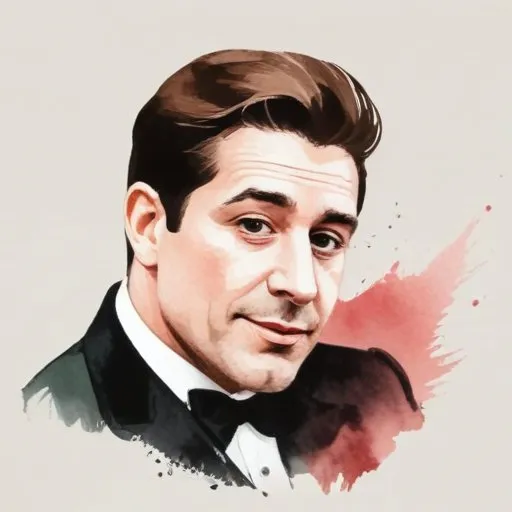
A popular pianist and bandleader of the 1940s and 1950s, known for his romantic and jazzy style, which dominated the airwaves and dance floors during the Big Band era.
Frankie Carle, born Francis Nunzio Carlone, was an American pianist and bandleader who rose to fame in the 1940s and 1950s with his unique style and captivating performances. He is best known for his iconic composition "Sunrise Serenade," which topped the charts in 1938 and sold over one million copies.
Carle was born on March 25, 1903, in Providence, Rhode Island, to a factory worker who couldn't afford a piano. However, his uncle, pianist Nicholas Colangelo, devised a dummy keyboard for him to practice on until he found a broken-down instrument in a dance hall. This early start led to Carle working with his uncle's band and other local bands in the Rhode Island area by the age of 13.
In the early 1920s, Carle began working with mainstream dance bands, including the Edwin J. McEnelly Orchestra, where he wrote arrangements and played piano. He later worked with Mal Hallett and his orchestra in 1934 and had his own orchestra in 1935, earning the title "America's Greatest Pianist."
Carle's big break came when he joined Horace Heidt and His Musical Knights in 1939, becoming co-leader of the band. His popularity during this time allowed him to leave the band in 1944 and form his own, The Frankie Carle Orchestra.
His orchestra became a sensation, with Carle's piano skills and charismatic performances drawing in crowds. His daughter, Marjorie Hughes, even sang with his band, although he didn't reveal their relationship until it was published by Walter Winchell.
After disbanding his orchestra in 1955, Carle continued to perform as a soloist, maintaining a loyal following until the 1980s. He passed away on March 7, 2001, at the age of 97, leaving behind a legacy as one of the most popular bandleaders of his time.
Frankie Carle's music and style have influenced many artists, including pianists and bandleaders of the 1940s and 1950s. His legacy continues to inspire new generations of musicians and music lovers alike.
Carle's contributions to music have been recognized with various awards and honors, including a Grammy nomination for "Sunrise Serenade." He has also been inducted into the Rhode Island Music Hall of Fame and the Big Band and Jazz Hall of Fame.
Born in 1904
A legendary trombonist, composer, and bandleader who led one of the most popular big bands of the 1930s and 1940s, creating iconic hits like "In the Mood" and "Moonlight Serenade".
Born in 1910
A virtuosic clarinetist and innovative bandleader, he revolutionized the swing era with his unique sound and iconic hits like "Begin the Beguine" and "Stardust".
Born in 1909
A virtuosic clarinetist and bandleader, known as the "King of Swing," who revolutionized jazz music with his energetic and sophisticated style, leading a racially integrated orchestra in the 1930s.
Born in 1899
A legendary jazz pianist, composer, and bandleader who revolutionized the genre with his unique style and iconic compositions, such as "Take the A Train" and "Mood Indigo".
Born in 1904
A legendary jazz pianist and bandleader who led a iconic orchestra, blending swing and blues to create a unique sound that influenced generations of musicians. Known for his distinctive "less-is-more" style and hits like "April in Paris" and "One O'Clock Jump".
Born in 1913
A legendary jazz musician and bandleader, known for his virtuosic saxophone and clarinet playing, and leading his iconic orchestra through the swing and bebop eras.
Born in 1912
A renowned saxophonist, composer, and bandleader, known for his iconic big band sound and hits like "Sentimental Journey" and "My Heart Belongs to Daddy".
Born in 1916
A legendary trumpet virtuoso and charismatic bandleader, known for his technical brilliance and romantic ballads, as well as his film appearances alongside iconic stars like Betty Grable.
