


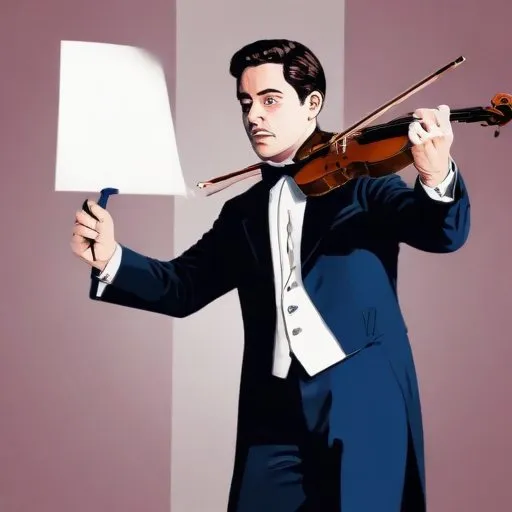
Franois Habeneck, a French classical violinist and conductor, is renowned for his significant contributions to the world of classical music, particularly during his tenure as the conductor of the Paris Opera. As a master of his craft, Habeneck conducted the first performances of several iconic operas, leaving an indelible mark on the music world.
Born on January 22, 1781, in Mzires, France, Habeneck was immersed in music from a young age. His father, a musician in a French regimental band, taught him the violin, and by the age of ten, Habeneck was performing concertos in public. In 1801, he entered the prestigious Conservatoire de Paris, where he studied under the guidance of Pierre Baillot, eventually obtaining the violin first prize in 1804.
In 1804, Habeneck joined the orchestra of the Opra-Comique, but soon transitioned to the Paris Opera, where he would make his mark. In 1806, he began conducting student concerts at the Conservatoire, and on June 1, 1817, he became an assistant conductor of the Paris Opera. Although he faced early challenges, Habeneck persevered, and by April 1820, he was jointly designated as a successor to Rodolphe Kreutzer, the first conductor of the Paris Opera.
As Habeneck's career flourished, so did the Paris Opera. He conducted the first performances of several iconic operas, including Robert le diable, La Juive, Les Huguenots, and Benvenuto Cellini. His collaboration with renowned composers and librettists helped shape theParis Opera's repertoire, which continues to influence classical music to this day.
Habeneck's contributions to the Paris Opera have left a lasting legacy, shaping the course of classical music. His dedication to nurturing new talent and promoting innovative works continues to inspire generations of musicians, conductors, and opera enthusiasts alike.
Franois Habeneck's remarkable career serves as a testament to his passion, dedication, and innovative spirit. As a maestro of the Paris Opera, he continues to influence the world of classical music, leaving behind a rich legacy that will be cherished for generations to come.
Born in 1782
A virtuosic violinist and composer who revolutionized the instrument's technical possibilities, leaving an indelible mark on classical music.
Born in 1770
A musical genius who expanded the possibilities of classical music, creating iconic symphonies and piano sonatas that continue to inspire and influence generations of artists.
Born in 1756
A child prodigy and master of classical music, he composed over 600 works, including symphonies, operas, and chamber music, that continue to inspire and influence musicians today.
Born in 1797
A renowned composer of symphonies, operas, and chamber music, particularly famous for his emotional and expressive lieder (art songs) that showcased his mastery of melody and harmony.
Born in 1792
Operatic mastermind behind iconic comedies like "The Barber of Seville" and "William Tell," crafting catchy, witty, and playful music that still delights audiences today.
Born in 1797
A renowned Italian composer of the Romantic era, best known for his operas, particularly "L'elisir d'amore" and "Don Pasquale", which are still widely performed today.
Born in 1803
A French Romantic-era mastermind who composed iconic symphonies, operas, and orchestral works, revolutionizing classical music with his bold, expressive style.
Born in 1782
A French Romantic-era composer, known for his operas, particularly "La Muette de Portici" and "Fra Diavolo", which showcased his mastery of melody and orchestration.
