


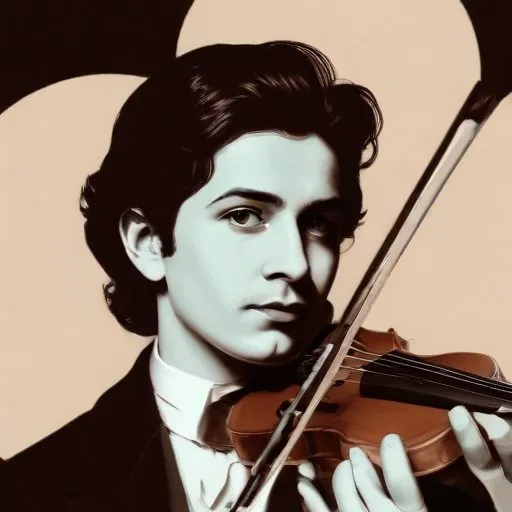
A virtuosic violinist and composer who bridged the gap between French and English musical styles, creating a unique sound that captivated 18th-century audiences.
Franois Hippolyte Barthlmon, a French violinist, pedagogue, and composer, is renowned for his captivating musical compositions that traversed the boundaries of genres and styles. His most enduring legacy, however, lies in his enchanting hymns, which continue to inspire and uplift generations of music lovers.
Born on July 27, 1741, in Bordeaux, Gironde, France, Barthlmon received his education in Paris, where he honed his skills in musical composition and violin. His formative years were spent performing in the orchestra of the Comdie-Italienne, an experience that would later shape his unique style.
In 1764, Barthlmon traveled to England, where he was commissioned to lead a band at the King's Theatre and Marylebone Gardens. His performances were met with enthusiasm, paving the way for his first dramatic stage work, Pelopida, an opera in three acts, which premiered at the King's Theatre in 1766.
This marked the beginning of a fruitful collaboration with David Garrick, the renowned actor and playwright, who engaged Barthlmon to compose music for his two-act farcical burletta based on the Orpheus myth. The premiere in 1768 was a resounding success, cementing Barthlmon's reputation as a versatile composer.
Barthlmon's dashing French style of composition allowed him to produce musical entertainments in a wide range of styles. He composed salon music, chamber music, and volumes of popular songs, some of which were published in London in 1790. His versatility extended to writing ballet music for the King's Theatre and composing scenes for humorous English ballad operas and masques.
One of his most notable works, The Maid of Oaks, a masque within a comedy in five acts, enjoyed immense success in 1774. Barthlmon's symphonies, of which six were composed, demonstrate his mastery over the genre.
Barthlmon's most enduring legacy lies in his iconic hymns, which have stood the test of time. His tune for "Morning Hymn" to Thomas Ken's hymn "Awake my soul, and with the sun..." is still widely revered. Thomas Hardy, the celebrated author, praised Barthlmon's work in his essay "Barthlmon at Vauxhall".
Another notable hymn, "Mighty God While Angels Bless Thee", showcases Barthlmon's skill in crafting melodies that resonate with the soul. His hymns have inspired generations of composers, ensuring his legacy as a master of melody.
In December 1766, Barthlmon married soprano and composer Polly Young, with whom he raised a family in England. His decision to stay in England marked the beginning of a new chapter in his life, where he continued to compose music that enthralled audiences.
Franois Hippolyte Barthlmon's multifaceted career, spanning over four decades, has left an indelible mark on the world of music. His compositions, characterized by their elegance and sophistication, continue to inspire and delight audiences, ensuring his legacy as a maestro of melody.
Born in 1732
A renowned composer and pianist of the Classical period, known for his symphonies, operas, and chamber music that showcased his innovative and expressive style. He played a significant role in shaping the Classical music era.
Born in 1756
A child prodigy and master of classical music, he composed over 600 works, including symphonies, operas, and chamber music, that continue to inspire and influence musicians today.
Born in 1770
A musical genius who expanded the possibilities of classical music, creating iconic symphonies and piano sonatas that continue to inspire and influence generations of artists.
Born in 1782
A virtuosic violinist and composer who revolutionized the instrument's technical possibilities, leaving an indelible mark on classical music.
Born in 1811
A virtuosic pianist and composer who revolutionized classical music with his technically demanding and emotionally expressive works, blending Hungarian folk influences with Romantic-era drama.
Born in 1809
A renowned 19th-century musician who masterfully blended classical and romantic styles, creating iconic works like the "Wedding March" and "Elijah" oratorio. His compositions continue to inspire and influence generations of artists.
Born in 1810
A renowned Romantic-era composer and influential music critic, known for his expressive and emotionally charged works, including symphonies, piano music, and art songs.
Born in 1833
A renowned pianist and composer, he crafted complex, expressive works that blended traditional and innovative techniques, leaving an indelible mark on classical music.
