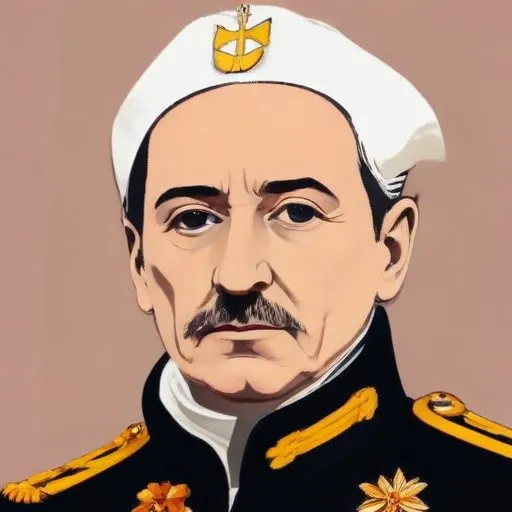
Franois Paul Brueys d'Aigalliers: The Illustrious Admiral of the French Revolutionary Wars
A Legacy of Valour and Sacrifice
Franois Paul Brueys d'Aigalliers, Comte de Brueys, was a decorated French naval officer who left an indelible mark on the annals of history. His unwavering bravery and strategic prowess as Vice-Admiral of the French fleet earned him a revered place in the pantheon of military heroes.
Early Life and Naval Career
Born on 12 February 1753, in Uzs, southern France, Brueys d'Aigalliers was born into an aristocratic family. His naval career began at the tender age of 13, when he volunteered on the ship-of-the-line Protecteur. He went on to serve in several campaigns in the Levant, and by 1768, he became a Garde de la marine. Brueys d'Aigalliers' dedication and tenacity propelled him through the ranks, earning him promotions to enseigne de vaisseau in 1777 and lieutenant de vaisseau in April 1780.
War of Independence and Revolutionary Wars
During the American War of Independence, Brueys d'Aigalliers fought valiantly in several battles, including those against Admiral Rodney in April and May 1780. He also participated in the pivotal Battle of the Chesapeake in September 1781 and the capture of Saint Kitts in February 1782. These heroic feats earned him the esteemed title of Chevalier de Saint-Louis at the end of the war.
Mediterranean Campaign and the Battle of the Nile
In 1798, Brueys d'Aigalliers led the French fleet in the Mediterranean campaign, showcasing his exceptional leadership skills and tactical acumen. However, his life was tragically cut short during the ill-fated Battle of the Nile on 1 August 1798. Despite being outgunned and outmanned, Brueys d'Aigalliers fought gallantly, going down with his ship in a blaze of glory.
Freemasonry and Personal Life
Beyond his military exploits, Brueys d'Aigalliers was an esteemed member of the La Bonne Foi lodge in Montauban, demonstrating his commitment to the principles of Freemasonry. His life was marked by a series of personal milestones, including his marriage and the birth of his children.
Legacy and Historical Context
Franois Paul Brueys d'Aigalliers' remarkable career serves as a testament to his unwavering dedication to France and his unrelenting pursuit of excellence. His bravery and sacrifice have inspired generations, cementing his place as one of the most revered naval heroes in French history.
Trivia and Fun Facts
- Brueys d'Aigalliers was born in a house that now bears a plaque with his name.
- He was forced to leave the Saint Domingue campaign due to illness and return to France.
- He served at shore establishments mostly on France's Mediterranean coast.
FAQ
What was François-Paul Brueys dAigalliers role in the French Revolutionary Wars?
François-Paul Brueys dAigalliers was a French admiral who played a significant role in the French Revolutionary Wars, serving as a fleet commander during the Battle of the Nile. He was killed in action on August 1, 1798.
What was the significance of the Battle of the Nile for Brueys dAigalliers career?
The Battle of the Nile was a pivotal naval battle where Brueys dAigalliers commanded the French fleet against the British, led by Horatio Nelson. Although he was killed in the battle, his bravery and leadership were recognized by both the French and British navies.
Where did Brueys dAigalliers serve as a naval commander?
Brueys dAigalliers served as a naval commander in the Mediterranean, particularly in the waters around Egypt and Syria, during the French Revolutionary Wars.
What is Brueys dAigalliers legacy in French naval history?
Brueys dAigalliers is remembered as a skilled and courageous naval commander who played a significant role in shaping French naval strategy during the Revolutionary Wars. He is also remembered for his bravery during the Battle of the Nile.
How is Brueys dAigalliers remembered in modern times?
Brueys dAigalliers is remembered through various monuments and memorials, including a statue in his hometown of Uzès, France. His life and legacy continue to be studied by historians and naval enthusiasts.