


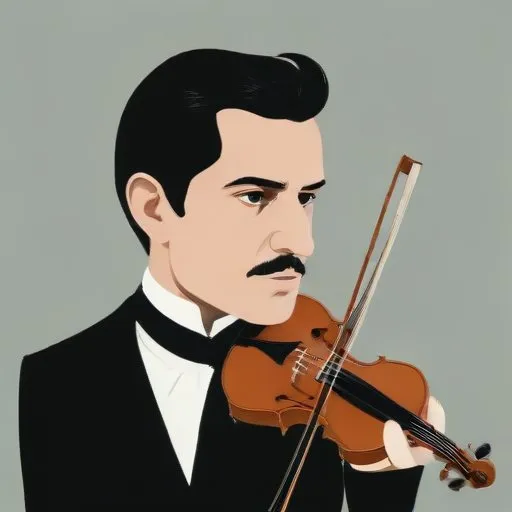
A renowned violinist and educator, known for his virtuosic performances and influential teaching methods that shaped the development of classical music.
Franz Anton Ries was a renowned German violinist, celebrated for his exceptional skill and artistry on the instrument. As a child prodigy, he rose to prominence in Vienna and Bonn, earning the admiration of prominent figures, including Ludwig van Beethoven, who was among his students.
Born on November 10, 1755, in Bonn, Germany, Ries was surrounded by music from an early age. His father, Johann Ries, was a court trumpeter to the Elector of Cologne, and Franz's early years were filled with the sounds of music and performance. He began his violin studies under the guidance of J.P. Salomon, a prominent musician and conductor.
Ries's talent and dedication earned him the position of concertmaster of the Kurfrstlichen Hoforchester in Vienna, a prestigious ensemble that showcased his skills to European royalty and nobility. His success in Vienna was followed by a successful career in Bonn, where he spent most of his life, teaching and performing.
One of Ries's most notable students was the young Ludwig van Beethoven, who would go on to become one of the most celebrated composers in history. Ries's instruction played a significant role in shaping Beethoven's musical development, and their relationship remains an important chapter in music history.
In addition to his work with Beethoven, Ries taught numerous other students, many of whom went on to become accomplished musicians in their own right. His teaching legacy continued through his sons, Ferdinand and Hubert, who both became well-known composers.
Ries's contributions to music were recognized and rewarded during his lifetime. He was awarded the Order of the Red Eagle and an honorary doctorate from the University of Bonn, acknowledging his dedication to the arts.
Throughout his long and distinguished career, Ries performed as a soloist and chamber musician, earning acclaim across Europe. He was a prolific teacher, instructor, and mentor, leaving an indelible mark on the world of classical music.
Ries's life and legacy are a testament to the power of dedication, hard work, and passion. As a virtuosic violinist, teacher, and mentor, he inspired generations of musicians, including some of the most celebrated figures in music history.
Ries lived a long and fulfilling life, passing away on November 1, 1846, at the age of 90, in Godesberg, Germany. His personal life was marked by a deep commitment to his family and his craft, and his later years were filled with the satisfaction of having made a lasting impact on the world of music.
Born in 1770
A musical genius who expanded the possibilities of classical music, creating iconic symphonies and piano sonatas that continue to inspire and influence generations of artists.
Born in 1833
A renowned pianist and composer, he crafted complex, expressive works that blended traditional and innovative techniques, leaving an indelible mark on classical music.
Born in 1797
A renowned composer of symphonies, operas, and chamber music, particularly famous for his emotional and expressive lieder (art songs) that showcased his mastery of melody and harmony.
Born in 1810
A renowned Romantic-era composer and influential music critic, known for his expressive and emotionally charged works, including symphonies, piano music, and art songs.
Born in 1809
A renowned 19th-century musician who masterfully blended classical and romantic styles, creating iconic works like the "Wedding March" and "Elijah" oratorio. His compositions continue to inspire and influence generations of artists.
Born in 1782
A virtuosic violinist and composer who revolutionized the instrument's technical possibilities, leaving an indelible mark on classical music.
Born in 1831
A renowned virtuoso violinist, composer, and conductor who revolutionized the classical music scene with his expressive performances and innovative compositions. He's also credited with premiering many iconic works, including Brahms' Violin Concerto.
Born in 1819
A renowned 19th-century pianist and composer, she was one of the first females to achieve recognition in a male-dominated field, creating over 60 pieces of music. Her compositions showcased romanticism and lyricism.
