


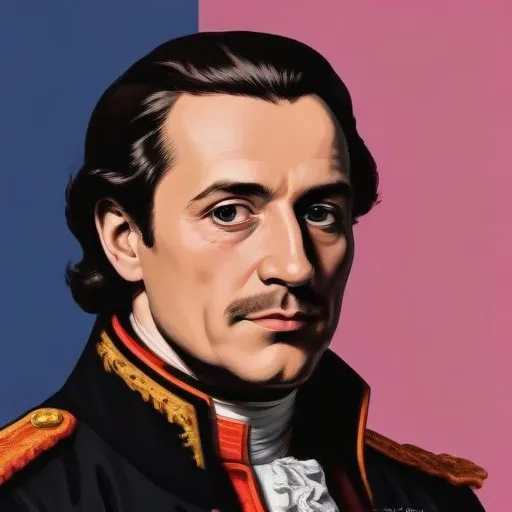
A German noble who promoted arts, culture, and education, and is known for his significant contributions to the development of opera and theater in Central Europe.
Franz Anton von Sporck, a German-speaking literatus and patron of the arts, left an indelible mark on the cultural and intellectual landscape of 18th-century Central Europe. As one of the most influential figures of his time, Count Sporck was a true Renaissance man, known for his patronage of arts, literature, and philosophy.
Born on March 9, 1662, in Lys nad Labem, Bohemia (now part of the Czech Republic), Count Sporck was the eldest of four children to Count Johann von Sporck and his second wife, Maria Eleonora of Fineke. His father, a military leader, was rewarded with lands confiscated from Protestant Bohemian nobles who refused to convert to Catholicism after the Thirty Years War.
Count Sporck's education was a testament to his family's noble status. He attended school in Hemanv Mstec and later at the Jesuit Latin School in Kutn Hora. In 1675, he began studying philosophy and law at Charles-Ferdinand University in the Prague Clementinum, graduating at just 16 years old in 1678.
In 1680, Count Sporck embarked on a Grand Tour of Europe, visiting Rome, Turin, southern France, Spain, Paris, England, The Hague, and Brussels. This journey had a profound impact on his worldview, and he developed a lifelong appreciation for French literature during his second visit to Paris in 1682.
Count Sporck's love for arts and literature led him to become a generous patron, supporting numerous writers, artists, and intellectuals. He was known for his exceptional taste in music, theatre, and poetry, and his court became a hub for cultural and intellectual exchange.
Count Sporck was deeply interested in philosophy, particularly the works of René Descartes and Gottfried Wilhelm Leibniz. He closely followed the intellectual debates of his time, engaging in discussions with prominent thinkers and philosophers.
Count Sporck's contributions to the cultural and intellectual landscape of 18th-century Europe were far-reaching. He played a significant role in promoting arts and letters, fostering a culture of intellectual curiosity and exchange.
Franz Anton von Sporck's life and legacy serve as a testament to the cultural and intellectual vibrancy of 18th-century Bohemia. His patronage of arts and letters helped shape the region's cultural identity, while his philosophical inclinations reflected the intellectual ferment of his time.
Franz Anton von Sporck's remarkable life and legacy continue to inspire and fascinate us to this day, offering a glimpse into the cultural and intellectual landscape of 18th-century Central Europe.
Born in 1741
Reformer of the Habsburg dominions, abolishing serfdom and promoting religious tolerance, who implemented numerous reforms to modernize his empire.
Born in 1747
The last Habsburg ruler to hold the title of Holy Roman Emperor, he oversaw the dissolution of the empire and played a key role in European politics during the French Revolution.
Born in 1768
The last Holy Roman Emperor, who ruled from 1792 to 1806, oversaw the dissolution of the Holy Roman Empire and was a key figure in European politics during the Napoleonic Wars.
