


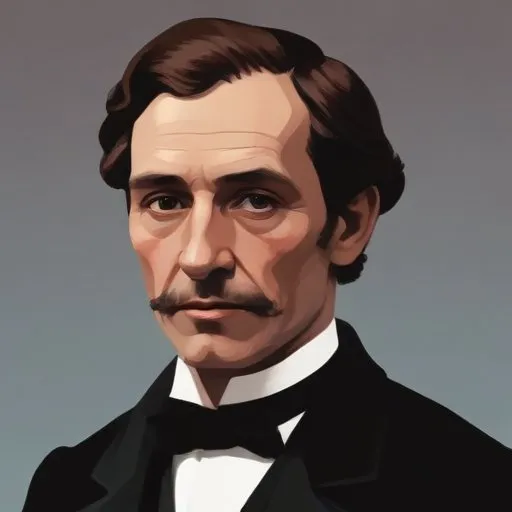
Co-founder of the Society for Psychical Research, a pioneering organization that explored paranormal phenomena, and a poet and philologist who delved into the mysteries of the human mind.
Frederic William Henry Myers is renowned for his groundbreaking work in the field of psychical research, a discipline that seeks to investigate paranormal phenomena using scientific methods. As one of the founders of the Society for Psychical Research, Myers dedicated his life to understanding the mysteries of the human mind, delving into the realms of telepathy, clairvoyance, and mediums.
Born on February 6, 1843, in Keswick, Cumberland, England, Myers was the son of a clergyman. He was educated at Cheltenham College and Trinity College, Cambridge, where he developed a strong interest in classical literature and philosophy. Myers was particularly drawn to the works of Plato and Aristotle, which would later influence his approach to psychical research.
Myers' fascination with the paranormal led him to co-found the Society for Psychical Research in 1882, along with Henry Sidgwick and Edmund Gurney. This organization aimed to apply scientific methods to the study of paranormal phenomena, distinguishing it from spiritualism and occultism. Myers played a crucial role in shaping the society's research agenda and methodology, which focused on collecting and analyzing data through experiments and observations.
Myers' most notable work is his book Human Personality and Its Survival of Bodily Death, published in 1903. This two-volume tome is a comprehensive treatise on psychical research, covering topics such as telepathy, clairvoyance, and the nature of human consciousness. The book is still regarded as a classic in the field and has influenced generations of researchers.
Myers' philosophical contributions lie in his conceptualization of the subconscious mind and its role in paranormal phenomena. He believed that the subconscious was a reservoir of hidden consciousness, capable of receiving and transmitting information beyond the boundaries of normal perception. This idea has had a significant impact on the development of modern psychology and psychoanalysis.
Myers was also interested in the concept of the "subliminal self," which he believed was a deeper, more spiritual aspect of human consciousness. He saw this as a potential source of creative inspiration, intuition, and even psychic abilities.
In 1867, Myers married Eveleen Tennant, a strong supporter of his work and a talented artist in her own right. The couple had three children, and their family life was marked by tragedy, including the death of their eldest son in 1894.
Myers' health declined in the early 1900s, and he passed away on January 17, 1901, at the age of 57. Despite his untimely death, Myers' work continued to influence the development of psychical research and psychology, leaving behind a legacy that remains relevant today.
Myers' pioneering work in psychical research has had a lasting impact on modern society. His emphasis on scientific rigor and objectivity has inspired generations of researchers, from parapsychologists to neuroscientists. The Society for Psychical Research, which he co-founded, continues to be a hub for paranormal investigation and education.
Myers' ideas about the subconscious mind and the subliminal self have also influenced literature and art, inspiring creative works that explore the mysteries of human consciousness. His work has been cited by authors such as Henry James and Virginia Woolf, demonstrating the crossover between psychical research and literary modernism.
Frederic William Henry Myers was a trailblazer in the field of psychical research, pushing the boundaries of scientific inquiry and challenging the norms of Victorian society. His work represents a fascinating intersection of science, philosophy, and spirituality, reflecting the intellectual ferment of the late 19th and early 20th centuries.
In an era marked by rapid industrialization and urbanization, Myers' research offered a counterpoint to the dominant materialism of the time, exploring the hidden dimensions of human consciousness and the nature of reality itself. His legacy continues to inspire researchers, scholars, and anyone fascinated by the mysteries of the human experience.
Born in 1838
A pioneering utilitarian philosopher and economist who developed influential theories on ethics, morality, and welfare economics, shaping modern thought on these subjects.
Born in 1842
Pioneering philosopher and psychologist who explored the nature of consciousness, free will, and religious experience, and is known for his pragmatic approach to philosophy and psychology.
51 Years Old
Founder of Venture for America, a nonprofit promoting entrepreneurship and job creation, and a 2020 presidential candidate who ran on a platform of Universal Basic Income and addressing automation's impact on jobs. Known for his innovative policies and outsider approach to politics.
Born in 1848
A Scottish-English lieutenant and politician who served as the 33rd Prime Minister of the United Kingdom, known for issuing the Balfour Declaration, a pivotal document supporting the establishment of a Jewish homeland in Palestine.
Born in 1823
A pioneering naturalist who discovered evolution through natural selection, independently of Charles Darwin, and contributed significantly to the field of biogeography.
Born in 1843
Co-founder of the Society for Psychical Research, a pioneering organization that explored paranormal phenomena, and a poet and philologist who delved into the mysteries of the human mind.
