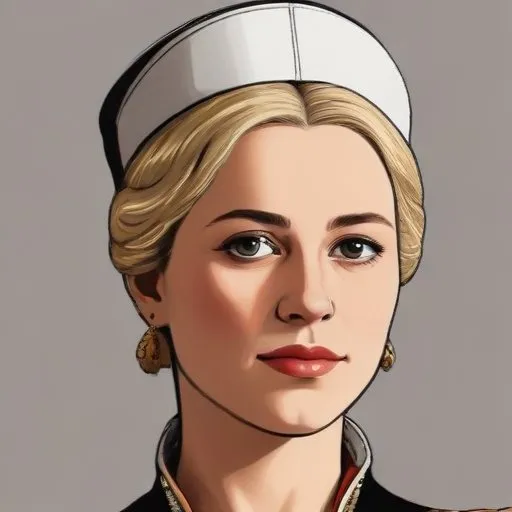
Frederica of Mecklenburg-Strelitz

Frederica of Mecklenburg-Strelitz

Frederica of Mecklenburg-Strelitz was born on March 3rd, 1778

Full Name: Duchess Frederica of Mecklenburg-Strelitz
Birthplace: Hanover, Germany
Nationality: German
Spouse: Prince Frederick William of Solms-Braunfels
Children: 2 children
Title: Duchess of Mecklenburg-Strelitz
Reign: 1786-1816
Death Date: February 29, 1841

The last queen of Prussia, known for her strong will and cultural patronage, played a significant role in shaping the country's arts and politics.

Written by: Lisa Chang Lisa Chang

Frederica of Mecklenburg-Strelitz: The German Princess with a Royal Legacy

Frederica of Mecklenburg-Strelitz, also known as Friederike Luise Caroline Sophie Alexandrine, was a German princess who left an indelible mark on European royalty. As the Queen of Hanover, she reigned from 1837 until her death in 1841, making her a significant figure in the history of the British monarchy.

Early Life and Education

Born on 3 March 1778 in the Altes Palais of Hanover, Frederica was the fifth daughter of Charles II, Duke of Mecklenburg-Strelitz, and Princess Friederike of Hesse-Darmstadt. After her mother's death in 1782, Frederica and her elder sisters were sent to live with their maternal grandmother, Princess Maria Louise of Hesse-Darmstadt, where they received a remarkable education under the guidance of a Swiss teacher, Salom de Glieu.

Marriages and Royal Ties

Frederica's father, anxious to secure advantageous marriages for his daughters, arranged for her to marry Prince Louis Charles of Prussia in 1793. However, the marriage was short-lived, and she soon married Prince Frederick William of Solms-Braunfels in 1798. Her third and most significant marriage was to her first cousin, Ernest Augustus, Duke of Cumberland, in 1815, making her a British princess and Duchess of Cumberland.

Reign as Queen of Hanover

Frederica's marriage to Ernest Augustus led to her ascending to the throne of Hanover in 1837, following the death of King William IV of the United Kingdom. As Queen, she played a crucial role in promoting the arts, culture, and education in Hanover, earning her immense popularity among her subjects.

Personal Milestones and Legacy

Philosophical Contributions and Beliefs

Frederica's life was guided by a strong sense of duty, loyalty, and compassion. She was deeply committed to her role as queen and wife, and her beliefs were shaped by her experiences as a member of European royalty.

Historical Context and Impact

Frederica's life spanned a crucial period in European history, marked by the Napoleonic Wars and the subsequent reorganization of the continent. Her marriage to Ernest Augustus and her ascension to the throne of Hanover played a significant role in strengthening the ties between the British and German royal families.

Frederica of Mecklenburg-Strelitz may have lived over two centuries ago, but her legacy as a strong, compassionate, and devoted queen continues to inspire and fascinate us to this day.

Timeline
1768
Born in Hanover, Germany
Frederica of Mecklenburg-Strelitz was born in Hanover, Germany, to a prominent royal family. She would go on to become Queen of Prussia.
1793
Marries Frederick William II of Prussia
Frederica married Frederick William II of Prussia, becoming Queen of Prussia and a prominent figure in European royal circles.
1797
Becomes Queen of Prussia
Frederica became Queen of Prussia following the death of her husband, ruling alongside her son Frederick William III.
1801
Establishes Berlins first educational institution
Frederica established Berlins first educational institution, promoting education and womens rights.
1841
Dies in Hanover, Germany
Frederica died in Hanover, Germany, leaving behind a legacy as a champion of education and womens rights.
Frederica of Mecklenburg-Strelitz

Frederica of Mecklenburg-Strelitz Quiz

What was Frederica of Mecklenburg-Strelitz known for?

Score: 0/5
FAQ
What was Frederica of Mecklenburg-Strelitz role in European royalty?
Frederica of Mecklenburg-Strelitz played a significant role in European royalty, serving as a queen consort of Prussia and a duchess of Mecklenburg-Strelitz. She was a member of the House of Mecklenburg-Strelitz, a prominent German noble family.
What is Frederica of Mecklenburg-Strelitz most notable achievement?
Frederica of Mecklenburg-Strelitz most notable achievement is her role in promoting cultural and educational developments in Prussia, particularly in the areas of art, literature, and education. She was a patron of the arts and sciences, supporting prominent figures such as Friedrich Schiller and Johann Wolfgang von Goethe.
How did Frederica of Mecklenburg-Strelitz marriage shape European politics?
Frederica of Mecklenburg-Strelitz marriage to Frederick William II of Prussia had a significant impact on European politics, strengthening the alliance between Prussia and Mecklenburg-Strelitz and paving the way for further dynastic marriages and alliances.
What was Frederica of Mecklenburg-Strelitz view on the role of women in society?
Frederica of Mecklenburg-Strelitz believed that women played a crucial role in society, serving as guardians of family, culture, and morality. She argued that womens education and intellectual development were essential to the well-being of society and the promotion of virtue and morality.
How did Frederica of Mecklenburg-Strelitz legacy shape German identity?
Frederica of Mecklenburg-Strelitz legacy has shaped German identity, symbolizing the cultural and intellectual achievements of the German Enlightenment and the importance of royal patronage in promoting art, literature, and education.

Related People:

Princess Charlotte of Prussia

Born in 1860

The last child and only daughter of German Emperor Frederick III and Victoria, Princess Royal, she was a pioneering figure in women's education and social reform. She founded several schools and institutions, promoting women's rights and education.

Queen Victoria

Born in 1819

The monarch who ruled the British Empire for 63 years, overseeing the Industrial Revolution and expanding the empire's reach, earning the nickname "the Grandmother of Europe".