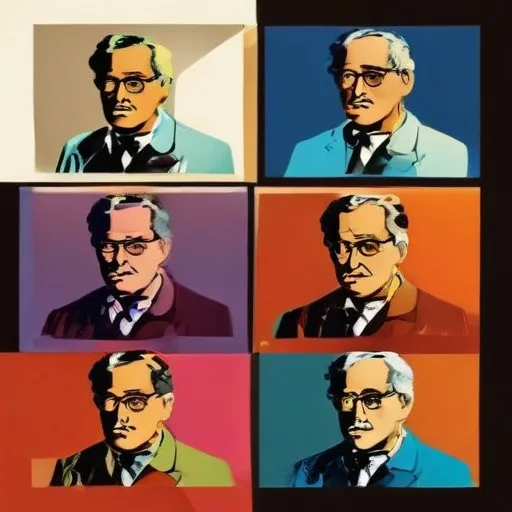
Frederick Blackman: The Pioneering Plant Physiologist
Introduction to a Legendary Career
Frederick Blackman is renowned for his groundbreaking contributions to the field of plant physiology, particularly in the realm of photosynthesis. His Law of Limiting Factors, proposed in 1905, revolutionized the understanding of the intricate processes governing plant growth and development.
Early Life and Education
Born on July 25, 1866, in Lambeth, London, Blackman was the son of a doctor. He pursued a degree in medicine at St. Bartholomew's Hospital, graduating with an MA. Subsequently, he delved into natural sciences at the University of Cambridge, where he was awarded a DSc.
Academic Pursuits and Research Contributions
Blackman conducted extensive research on plant physiology at Cambridge, with a primary focus on photosynthesis. His work led to the development of the Law of Limiting Factors, which posits that the rate of a process is limited by the pace of the slowest factor. This concept has far-reaching implications for understanding the intricate relationships between factors such as light, temperature, and CO
2 concentrations in plant growth.
Award and Recognition
In recognition of his outstanding contributions, Blackman was elected a Fellow of the Royal Society in 1906. He received the Royal Medal in 1921 and delivered the prestigious Croonian lecture in 1923.
Legacy and Impact on Modern Botany
Blackman's work has had a profound impact on the field of botany, influencing generations of scientists and researchers. His Law of Limiting Factors remains a cornerstone of plant physiology, informing studies on crop yield, agricultural productivity, and environmental sustainability.
Influence on Contemporary Research
Blackman's pioneering work paved the way for subsequent breakthroughs in plant biology, including the discovery of the Calvin cycle and the elucidation of the light-dependent reactions of photosynthesis.
Personal Life and Later Years
Blackman retired from his position at Cambridge in 1936. He was married to Elsie (1882-1967) and was buried at the Parish of the Ascension Burial Ground in Cambridge.
Trivia and Fun Facts
- Blackman's research was facilitated by his assistant, Gabrielle Matthaei, until 1905.
- He was a lecturer and reader in botany at the University of Cambridge.
Historical Context and Comparative Analysis
Blackman's contributions to plant physiology occurred during a period of significant scientific advancement in the early 20th century. His work was contemporaneous with that of other notable botanists, such as Frederick Keeble and William Bateson, and built upon the foundations laid by earlier scientists like
Jan Ingenhousz and Julius von Sachs.
FAQ
What were Frederick Blackmans contributions to plant physiology?
Frederick Blackman was a renowned English physiologist who made significant contributions to plant physiology, specifically in the field of photosynthesis. His work on the rate of photosynthesis and its relationship with light intensity is still widely cited today.
What awards did Frederick Blackman receive for his work?
Frederick Blackman received several awards for his contributions to plant physiology, including the Royal Medal from the Royal Society in 1921. He was also elected as a Fellow of the Royal Society in 1906.
What was Frederick Blackmans academic background?
Frederick Blackman studied natural sciences at Cambridge University, where he earned his Bachelors degree in 1891. He later earned his Masters degree in 1894 and went on to become a lecturer at Cambridge.
How did Frederick Blackmans work impact agriculture?
Frederick Blackmans work on photosynthesis and plant growth had significant implications for agriculture. His research helped farmers understand how to optimize plant growth and increase crop yields, leading to improved agricultural practices.
What was Frederick Blackmans role in the development of modern ecology?
Frederick Blackman was a pioneer in the field of modern ecology. His work on plant physiology laid the foundation for the development of modern ecological theories, and his research on the interactions between plants and their environment remains influential to this day.