


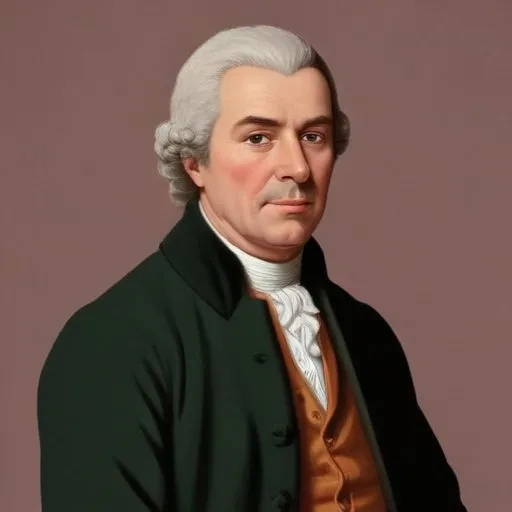
A Dutch physician, physiologist, and botanist who discovered photosynthesis and its importance in plant growth, and also made significant contributions to the study of light and its effects on living organisms.
Jan Ingenhousz, a Dutch-British physiologist, biologist, and chemist, is renowned for his groundbreaking discovery of photosynthesis, demonstrating that light is essential for green plants to absorb carbon dioxide and release oxygen. This breakthrough revelation transformed our understanding of plant life and paved the way for significant advances in botany, ecology, and environmental science.
Born on December 8, 1730, in Breda, Staats-Brabant, Dutch Republic, Ingenhousz was born into the patrician Ingen Housz family. At the age of 16, he began studying medicine at the University of Leuven, where he obtained his MD in 1753. He furthered his education at the University of Leiden, attending lectures by prominent figures like Pieter van Musschenbroek, which sparked his lifelong interest in electricity.
Following his father's death in 1764, Ingenhousz embarked on a European journey to expand his knowledge, starting in England. There, he learned the latest inoculation techniques against smallpox, a disease that was rampant at the time. His expertise soon earned him the recognition of Empress Maria Theresa, who requested his assistance in inoculating her family against the disease.
In 1768, Ingenhousz successfully inoculated the members of the Habsburg family in Vienna, earning him significant acclaim. This achievement led to his appointment as the private counsellor and personal physician to Empress Maria Theresa. His work in smallpox inoculation not only saved countless lives but also established him as a prominent figure in the medical community.
Ingenhousz's most significant contribution to science was his discovery of photosynthesis. Through meticulous experimentation, he demonstrated that light is essential for plants to absorb carbon dioxide and release oxygen. This fundamental understanding has had a profound impact on our comprehension of plant biology, ecosystem dynamics, and the Earth's climate.
Jan Ingenhousz's pioneering work has left an indelible mark on the scientific community. His discovery of photosynthesis has inspired generations of scientists, sparking new areas of research and inquiry. His contributions to the fight against smallpox have saved countless lives, and his influence on modern medicine is immeasurable.
Ingenhousz's work embodies the spirit of scientific inquiry and the pursuit of knowledge. His groundbreaking discoveries and contributions to medicine and botany have inspired generations to continue exploring and understanding the natural world.
Ingenhousz's life and work span a critical period in scientific history, marked by significant advances in medicine, biology, and chemistry. His discovery of photosynthesis has had a lasting impact on our understanding of the natural world, and his influence can be seen in the many areas of research that have arisen from his pioneering work.
Jan Ingenhousz's remarkable legacy serves as a testament to the power of human curiosity and the importance of scientific inquiry. His contributions to our understanding of the world around us have left a lasting impact, inspiring future generations to continue exploring and pushing the boundaries of human knowledge.
Born in 1632
Pioneering microbiologist who discovered microorganisms like bacteria, yeast, and protists, laying the foundation for modern microbiology.
Born in 1668
A Dutch botanist and physician who laid the foundations for modern medicine by emphasizing clinical observation, experimentation, and scientific rigor, and is considered the father of physiology.
Born in 1514
A pioneering figure in the study of human anatomy, known for performing detailed dissections and creating accurate drawings of the body's inner workings, revolutionizing medical understanding.
Born in 1578
Discovered the circulatory system and described how blood flows through the body, revolutionizing understanding of human physiology.
Born in 1596
Developed influential philosophical and mathematical concepts, including the famous phrase "I think, therefore I am," and laid the foundation for modern Western philosophy.
Born in 1561
A 16th-17th century Renaissance figure who pioneered the scientific method and empiricism, and served as a prominent government official.
