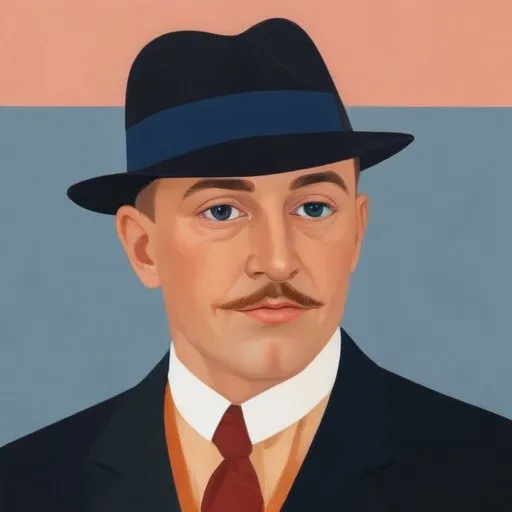
Frederick Carl Frieseke: The Master of Dappled Light
A Pioneering Impressionist
Frederick Carl Frieseke was an American Impressionist painter renowned for his captivating depictions of dappled sunlight and its effects on the human form. With a career spanning over four decades, Frieseke's work continues to mesmerize art enthusiasts with its ethereal quality, earning him a prominent place in the annals of Impressionist art.
Early Life and Influences
Born on April 7, 1874, in Owosso, Michigan, Frieseke was the son of Herman Carl and Eva Graham Frieseke. His early life was marked by tragedy, with the loss of his mother at the tender age of six. This event would later influence his artwork, as he sought to capture the fleeting nature of life and beauty.
The Artistic Journey Begins
Frieseke's artistic inclinations were encouraged by his grandmother, Valetta Gould Graham, who shared his passion for painting. A visit to the 1893 World's Columbian Exposition in Chicago cemented his decision to pursue a career in art. He began his formal training at the Art Institute of Chicago, studying under Frederick Warren Freer and John Vanderpoel.
The Move to France and the Giverny Art Colony
In 1898, Frieseke relocated to France, where he became an integral member of the Giverny art colony. This community of artists, including
Claude Monet and
Pierre-Auguste Renoir, would have a profound impact on Frieseke's style and technique. His work during this period was characterized by its focus on capturing the effects of dappled sunlight, often using his wife, Sadie O'Bryan Frieseke, as his model.
Major Works and Career Highlights
Frieseke's oeuvre includes numerous masterpieces, such as
The Garden Chair (1912) and
The Basket Chair (1916). These works showcase his ability to capture the intricate play of light and shadow, as well as his fascination with the female form.
Awards and Recognitions
Throughout his career, Frieseke received numerous accolades, including a silver medal at the 1906 Salon d'Automne and a gold medal at the 1915 Panama-Pacific Exposition.
Philosophical Contributions and Beliefs
Frieseke's artwork was underpinned by a deep commitment to capturing the ephemeral nature of life. He believed that art should be a reflection of the beauty and wonder of the world, rather than a mere representation of reality.
Personal Milestones and Key Life Events
Frieseke's personal life was marked by significant events, including his marriage to Sadie O'Bryan in 1904 and the birth of their daughter, Frances, in 1905.
Legacy and Impact on Modern Art
Frieseke's contributions to Impressionist art continue to inspire and influence contemporary artists. His work remains a testament to the power of light and its ability to transform the human experience.
Trivia and Fun Facts
- Frieseke was known for his love of music and played the violin in his spare time.
- He was an avid traveler and spent time in Italy, Spain, and Germany, where he was inspired by the local architecture and landscapes.
- Frieseke's artwork can be found in notable collections, including the Metropolitan Museum of Art and the Art Institute of Chicago.
Conclusion
Frederick Carl Frieseke's remarkable body of work continues to captivate art lovers with its dreamlike quality and captivating depictions of dappled light. As a pioneering Impressionist, Frieseke's contributions to the art world remain unparalleled, leaving an indelible mark on the history of modern art.
FAQ
What style of painting did Frederick Carl Frieseke contribute to?
Frederick Carl Frieseke was an American Impressionist painter, known for his vibrant depictions of landscapes, gardens, and figures. His work was characterized by its emphasis on light and color.
Where did Frederick Carl Frieseke study art?
Frieseke studied art at the Art Institute of Chicago and later at the Académie Julian in Paris, where he was influenced by French Impressionism and the works of Claude Monet.
What is Frederick Carl Friesekes most famous work?
Friesekes most famous work is The Garden, a 1912 painting that showcases his use of bold, vibrant colors and loose brushstrokes to capture the beauty of nature.
How did Frederick Carl Friesekes style evolve over time?
Friesekes style evolved from a more traditional, representational approach to a more expressive, Impressionist style, characterized by bold colors and loose brushstrokes.
What is Frederick Carl Friesekes legacy in American art?
Friesekes contributions to American Impressionism helped pave the way for future generations of American artists, and his work remains celebrated for its beauty, elegance, and emotional depth.