


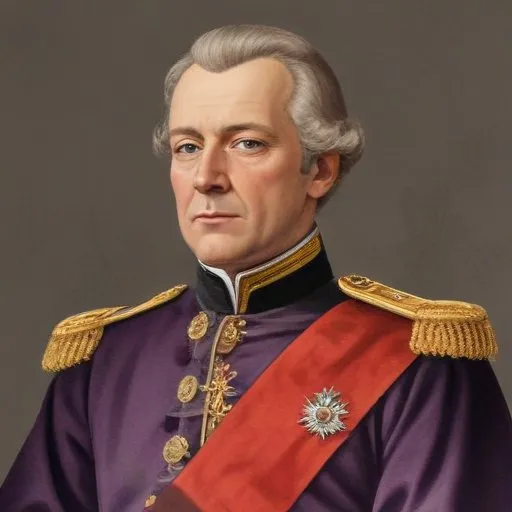
The Prince-Elector of Saxony was a powerful German ruler who played a crucial role in the Seven Years' War and was a patron of the arts, commissioning famous composers like Johann Sebastian Bach. He's also known for his cultural achievements, including the establishment of the Dresden Academy of Fine Arts.
Frederick Christian, Prince-Elector of Saxony, is renowned for his brief yet impactful reign of 73 days in 1763, during which he introduced progressive reforms and showcased his commitment to the ideals of the Enlightenment. Despite his short tenure, Frederick Christian left an indelible mark on the history of Saxony and beyond.
Born on September 5, 1722, Frederick Christian was the third son of Frederick Augustus II, Prince-Elector of Saxony and King of Poland, and Maria Josepha of Austria. His early life was marked by physical frailty, and he suffered from paralysis in one foot, which forced him to rely on wheelchairs from an early age. This physical limitation, however, did not deter him from pursuing his intellectual and artistic passions.
Frederick Christian was deeply influenced by the ideals of the Enlightenment, as evident in his diary entry, "Princes exist for their subjects, not subjects for their princes." This sentiment reflects his commitment to prioritizing the welfare of his subjects and his recognition of the importance of public credit, wealth, and a strong army in ensuring the happiness of his people.
In addition to his progressive ideals, Frederick Christian was also an accomplished musician. His love for music was shared by his wife, Maria Antonia of Bavaria, whom he married in 1747. The couple had nine children together and enjoyed a strong bond, strengthened by their shared passions.
Upon ascending to the throne in 1763, Frederick Christian wasted no time in addressing the pressing issues facing Saxony. He dismissed the unpopular prime minister, Count Heinrich von Brühl, who had plunged the electorate into crisis through his flawed economic and foreign policies. This decisive action marked the beginning of a new era in Saxony, characterized by reform and renewal.
Tragically, Frederick Christian's life was cut short when he died on December 17, 1763, after a brief reign of just 73 days. Despite the brevity of his tenure, his impact on Saxony and the wider world was significant, and his legacy continues to inspire and influence generations to come.
Frederick Christian's love for music and his commitment to Enlightenment principles continue to inspire and influence artistic and intellectual endeavors in Saxony and beyond. His legacy serves as a testament to the power of progressive ideals and the importance of prioritizing the welfare of one's people.
Born in 1670
A powerful Polish king who transformed his country into a major European power through military conquests and cultural achievements, earning him the nickname "the Strong".
Born in 1657
King of Prussia from 1701 to 1713, crowned himself king, and established Berlin as his capital, transforming Prussia into a major power. He's known for his cultural and economic reforms.
