


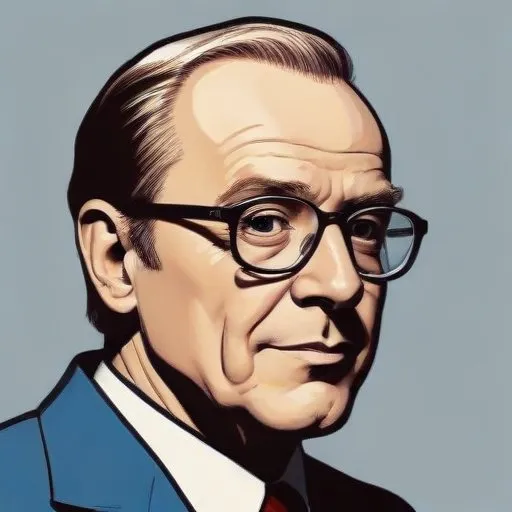
An American composer and academic, known for his romantic and impressionist music, as well as his teaching and administrative roles at prestigious institutions.
Renowned American composer Frederick Converse is best known for his significant contributions to classical music, leaving behind a legacy of four operas and five symphonies that continue to inspire and influence musicians to this day. Born on January 5, 1871, in Newton, Massachusetts, Converse's life was a testament to his passion for music, which he nurtured through his education and career.
Converse was born to a prominent family, with his father, Edmund Winchester, being a successful merchant and president of the National Tube Works and the Conanicut Mills. This allowed Converse to pursue his musical interests from an early age, receiving piano lessons and developing a strong foundation in musical theory.
Converse attended Harvard College, where he came under the influence of composer John K. Paine. This exposure further fueled his passion for music, and upon graduating in 1893, his violin sonata op. 1 was performed, earning him the highest honors in music.
After a brief stint in business, Converse returned to his true calling, studying piano under Carl Baermann and composition under George W. Chadwick. He then spent two years at the Royal Academy of Music in Munich, where he was mentored by Joseph Rheinberger, completing his course in 1898.
In 1899, Converse's Symphony in D minor premiered, marking a significant milestone in his career. He went on to teach harmony at the New England Conservatory of Music in Boston and later joined the faculty of Harvard University as an instructor in music, becoming an assistant professor in 1905.
Converse's impact on the music world extends beyond his own compositions. He taught and mentored several notable students, including Alan Hovhaness, Florence Price, and Hisato Ohzawa. His influence can be seen in the works of these students, who went on to make significant contributions to classical music.
Converse's oeuvre includes four operas, including The Pipe of Desire, The Sacrifice, Simonson, and Fairer than Truth. He also composed five symphonies, showcasing his mastery of orchestral music.
In 1894, Converse married Emma Tudor, and they had seven children together, including five daughters. His family life was marked by a strong sense of tradition and a love for music, which was passed down through generations.
Frederick Converse's contributions to American classical music are immeasurable. His compositions continue to be performed and admired, and his influence can be seen in the works of his students and contemporaries. He passed away on June 8, 1940, leaving behind a rich legacy that continues to inspire and delight audiences today.
Frederick Converse's life was a testament to his passion for music and his dedication to his craft. His compositions continue to delight audiences, and his legacy serves as a reminder of the power of music to inspire and uplift.
Born in 1854
A prominent composer and educator who contributed significantly to American classical music, particularly in the Romantic era, and founded the New England Conservatory of Music.
Born in 1863
A renowned organist, composer, and educator who made significant contributions to American music, particularly in the field of church music and choral composition.
Born in 1860
A renowned pianist and composer, he crafted romantic-era masterpieces that evoke a sense of American folk music, with his most famous work being the "Piano Concerto No. 2".
Born in 1839
A renowned composer and academic who helped establish music education in the United States, known for his contributions to the development of American classical music.
Born in 1859
A renowned cellist, composer, and conductor, he is most known for his operettas, such as "Babes in Toyland" and "Naughty Marietta", which showcased his mastery of light opera and musical comedy.
Born in 1871
A prominent figure in American classical music, he founded the San Francisco Symphony and composed operas, orchestral works, and chamber music. His contributions helped establish California as a hub for classical music.
