


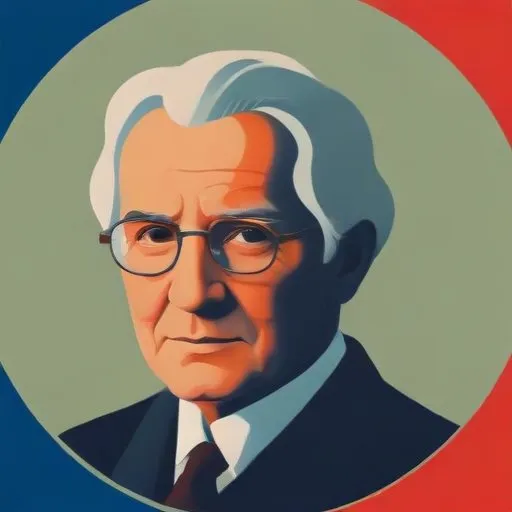
A renowned composer and academic who helped establish music education in the United States, known for his contributions to the development of American classical music.
John Knowles Paine, born on January 9, 1839, was the first American-born composer to achieve widespread recognition for his large-scale orchestral music. As a prominent figure in the Boston Six, a group of influential American composers, Paine played a significant role in shaping the country's concert music landscape.
Paine grew up in a family deeply rooted in music. His grandfather, an instrument maker, built the first pipe organ in Maine, while his father and uncles were music teachers. Paine's early exposure to music led him to take lessons in organ and composition from Hermann Kotzschmar, completing his first composition, a string quartet, at the tender age of 16.
In the 1850s, Paine traveled to Europe, where he studied organ with Carl August Haupt and orchestration with Wilhelm Friedrich Wieprecht in Berlin. During his three-year stay, he established himself as a renowned organist, giving recitals across Europe. His European sojourn laid the groundwork for his subsequent success in the United States.
Upon his return to the United States, Paine settled in Boston and was appointed Harvard's first University organist and choirmaster in 1861. He introduced free courses in music appreciation and music theory, which became the foundation of Harvard's newly formed academic music department – the first of its kind in the United States. Paine's contributions to music education earned him the distinction of being America's first music professor.
John Knowles Paine's remarkable career spanned over four decades, during which he played a pivotal role in shaping American concert music. Through his compositions, teachings, and pioneering efforts in music education, Paine left an indelible mark on the country's cultural landscape.
Born in 1860
A renowned pianist and composer, he crafted romantic-era masterpieces that evoke a sense of American folk music, with his most famous work being the "Piano Concerto No. 2".
Born in 1863
A renowned organist, composer, and educator who made significant contributions to American music, particularly in the field of church music and choral composition.
Born in 1854
A prominent composer and educator who contributed significantly to American classical music, particularly in the Romantic era, and founded the New England Conservatory of Music.
45 Years Old
A pioneering filmmaker behind groundbreaking documentaries and dramas, exploring themes of social justice, identity, and humanity. Her works often spark crucial conversations and inspire empathy.
Born in 1857
A renowned composer and educator, best known for his iconic orchestral works, including the majestic "Pomp and Circumstance" march, which is a staple at graduations worldwide.
Born in 1835
A French Romantic-era mastermind who composed iconic works like "The Carnival of the Animals" and "Danse Macabre", leaving an indelible mark on classical music.
Born in 1822
A Belgian organist and composer who created iconic works that blended Romanticism and Impressionism, leaving a lasting impact on classical music.
Born in 1833
A renowned pianist and composer, he crafted complex, expressive works that blended traditional and innovative techniques, leaving an indelible mark on classical music.
