


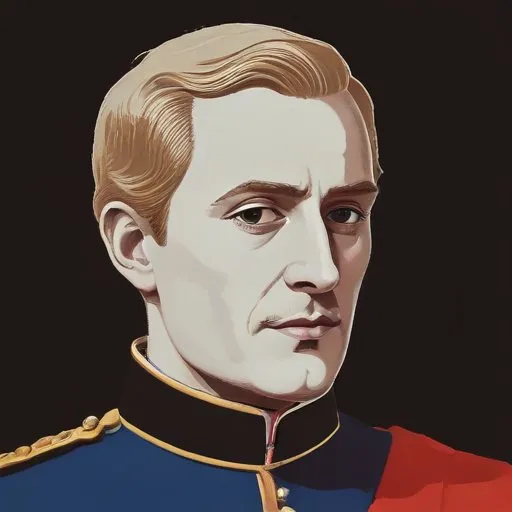
A German nobleman who ruled the Palatinate of Simmern from 1459 to 1480, known for his military campaigns and territorial expansions. He played a significant role in the history of the Palatinate region.
Frederick I, Count Palatine of Simmern, also known as Friedrich I, is remembered as a prominent figure in German history, serving as the Count Palatine of Simmern from 1459 until his death in 1480. He is notable for his significant contributions to the region, his strong family ties, and his lasting impact on European nobility.
Born on November 19, 1417, Frederick was the son of Stephen, Count Palatine of Simmern-Zweibrücken, and his wife, Anna of Veldenz. In 1444, his father partitioned his territories between Frederick and his younger brother Louis, setting the stage for Frederick's future role as a leader.
On August 16, 1454, Frederick married Margaret of Guelders, daughter of Duke Arnold of Guelders. Together, they had 10 children, including:
During his reign, Frederick focused on strengthening his territories and solidifying his family's position within the nobility. His marriage to Margaret of Guelders also helped to secure alliances with other powerful families in the region.
Frederick's legacy extends beyond his territorial accomplishments, as he played a significant role in shaping the future of the Palatinate of Simmern. His children went on to hold important positions within the church and nobility, further solidifying the family's influence.
Frederick I, Count Palatine of Simmern, died on November 29, 1480, in Simmern. He was buried in the Augustinian Abbey of Ravengiersburg, a testament to his strong connection to the church.
Frederick I, Count Palatine of Simmern, was a remarkable figure in German history, leaving behind a lasting legacy through his family, territories, and contributions to European nobility. His life serves as a testament to the complex web of alliances and power dynamics that shaped the medieval period.
Born in 1504
A German nobleman who ruled Hesse from 1509 to 1567, known for being a champion of the Protestant Reformation and a key figure in the Schmalkaldic League.
Born in 1503
Elector of Saxony who played a key role in the Protestant Reformation and was a prominent leader of the Schmalkaldic League, a defensive alliance of Protestant states. He's also known for being captured and imprisoned by Emperor Charles V.
Born in 1500
Ruling over a vast empire from 1519 to 1556, he was a powerful and influential leader who played a crucial role in shaping European politics and religion. He is most known for his efforts to unify Christian Europe and defend it against the Ottoman Empire.
Born in 1503
The first Habsburg to rule the Holy Roman Empire, he unified Austria and introduced the concept of a hereditary monarchy, shaping European politics for centuries to come.
Born in 1478
Elector of the Palatinate, a powerful German state, and leader of the Protestant Union during the Thirty Years' War. He's known for his role in the early stages of this devastating conflict.
