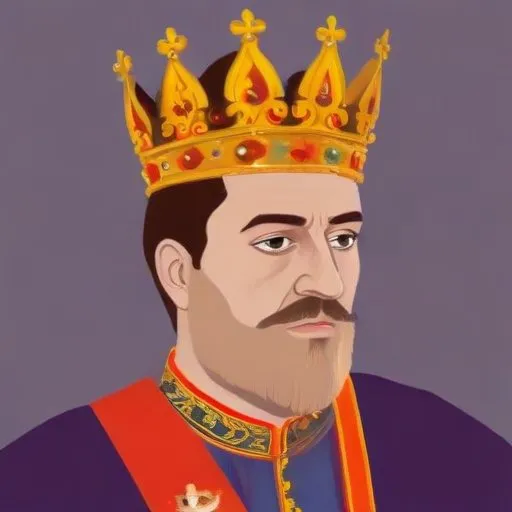
Frederick III of Sicily: The Uncompromising Ruler
A Monarch of Reforms
Frederick III of Sicily, also known as Frederick II, left an indelible mark on the Kingdom of Sicily through his reign from 1295 to 1337. He is revered for his sweeping constitutional reforms, which epitomized his commitment to the welfare of his subjects.
Early Life and Accession
Born on December 13, 1272, in Barcelona, Frederick was the third son of
Peter III of Aragon. Following the death of his brother Alfonso in 1291, Frederick's brother James became king of Aragon, and Frederick was appointed regent of Sicily. In 1295, he ascended to the throne, solidifying his position as king.
The War of the Sicilian Vespers
Frederick played a pivotal role in the War of the Sicilian Vespers, fighting on behalf of his father and brothers against the Angevins, who sought to claim the title to Sicily. This conflict ultimately led to the signing of the Peace of Caltabellotta in 1302, confirming Frederick's position as king.
Constitutional Reforms
Frederick's reign was characterized by a series of groundbreaking reforms, which aimed to enhance the lives of his subjects. The
Constitutiones regales,
Capitula alia, and
Ordinationes generales were among the key reforms that redefined the governance of Sicily. These innovations earned him the respect of his contemporaries and cemented his legacy in the annals of history.
The Significance of Regnal Numbers
Frederick chose to style himself as
Frederick III, rather than Frederick II, despite being the second Frederick to rule Sicily. This decision was likely influenced by his great-grandfather, Frederick II, who had ruled Sicily and used an official ordinal. By selecting the numeral III, Frederick aligned himself with his ancestors' precedent.
Legacy and Impact
Frederick III's reforms had far-reaching consequences, shaping the course of Sicilian history and influencing the development of constitutional governance. His commitment to the welfare of his subjects and his unwavering dedication to reform earned him a place among the most renowned monarchs of the medieval era.
Personal Milestones and Key Life Events
- Born on December 13, 1272, in Barcelona
- Appointed regent of Sicily in 1291
- Ascended to the throne in 1295
- Signed the Peace of Caltabellotta in 1302
- Died on June 25, 1337
Historical Context and Legacy
Frederick III's reign was marked by turmoil and conflict, yet he emerged as a beacon of hope for his subjects. His reforms paved the way for a more just and equitable society, earning him a lasting legacy in the history of Sicily. As a testament to his enduring impact, Frederick III remains an important figure in the study of medieval monarchs and constitutional governance.
FAQ
What is Frederick III of Sicilys place in history?
Frederick III of Sicily was a king of Sicily in the 14th century, known for his military campaigns and his role in the War of the Sicilian Vespers.
How did Frederick III of Sicily rise to power?
Frederick III of Sicily was a member of the House of Barcelona and rose to power through his marriage to Constance of Sicily, becoming king in 1302.
What were Frederick III of Sicilys military achievements?
Frederick III of Sicily led several successful military campaigns, including the conquest of Corsica and the annexation of Malta, and fought against the Crown of Aragon and the Holy Roman Empire.
What is Frederick III of Sicilys legacy?
Frederick III of Sicily is remembered as a strong and capable leader who consolidated Sicilian power and expanded its territories, although his reign was also marked by conflicts and power struggles.
What are the historical records of Frederick III of Sicilys life?
The historical records of Frederick III of Sicilys life are limited, but he is mentioned in several contemporary chroniclers, including the works of Ramon Muntaner and the Chronica of Naples.