


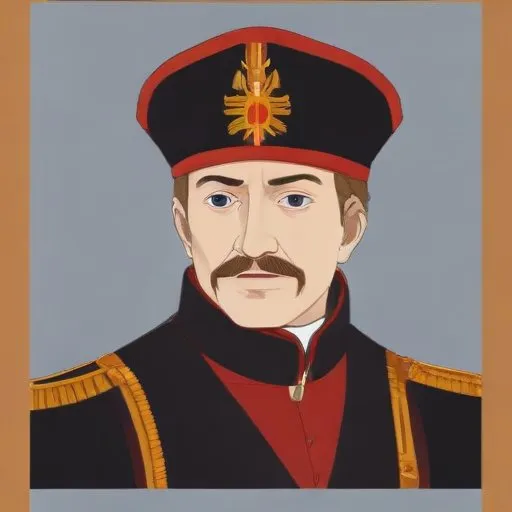
A 13th-century Polish duke who ruled Legnica and was a skilled military leader, known for his battles against the Mongols. He's also remembered for his cultural achievements, including the establishment of a university.
Few personalities in history have left an indelible mark on their region like Frederick II of Legnica, also known as the Great of Legnica. This 15th-century Duke of Legnica is renowned for his exceptional financial acumen, which enabled him to expand his duchy to the Oder River and establish the Duchy of Legnica-Brzeg, a testament to his enduring legacy.
Born on February 12, 1480, Frederick II was the second son of Frederick I, Duke of Chojnów, Oława, Legnica, Brzeg, and Lubin, and Ludmila, daughter of George of Poděbrady, King of Bohemia. Following his father's death in 1488, Frederick II and his brothers, John II and George I, inherited Legnica, Chojnów, and Lubin under the regency of their mother, Dowager Duchess Ludmila.
After the premature death of his older brother John II in 1495, Frederick II became the head of his house, although he remained under his mother's tutelage for three more years. In 1498, he finally took over the government of Legnica. In 1507, Frederick II embarked on a pilgrimage to the Holy Land, where he was knighted as a Knight of the Holy Sepulchre.
Frederick II's astute financial management and strategic decisions enabled him to expand his duchy significantly. He inherited Brzeg after his brother George I's death in 1521, and the purchase of Wołów in 1523 further bolstered his finances. This period marked a golden era of prosperity in his domains. During 1516-1526, he also served as Governor of Lower Silesia, demonstrating his administrative prowess.
Frederick II's visionary leadership and financial expertise have left a lasting impact on the region. He successfully navigated the complex web of alliances and rivalries in Silesia, ensuring the continued prosperity of his duchy. His legacy extends beyond his territorial expansions, as he also fostered a culture of economic growth and stability, benefiting generations to come.
Frederick II of Legnica's remarkable life is a testament to his exceptional leadership, financial acumen, and vision. His enduring legacy continues to inspire, serving as a shining example of effective governance and economic management in the face of adversity.
Born in 1310
The last Piast king of Poland, who reformed the country's judicial system, established universities, and promoted trade and commerce, earning him the title "the Great".
Born in 1500
Ruling over a vast empire from 1519 to 1556, he was a powerful and influential leader who played a crucial role in shaping European politics and religion. He is most known for his efforts to unify Christian Europe and defend it against the Ottoman Empire.
Born in 1326
King of Hungary and Poland who ruled with an iron fist, expanding his kingdom and establishing a strong centralized government. He's also known for his military campaigns against the Ottoman Empire.
Born in 1361
King of Bohemia from 1378 to 1419, known for his tumultuous reign marked by power struggles, conflicts, and a Black Death pandemic. He was a key figure in the Luxembourg dynasty.
Born in 1218
King of the Germans from 1273 to 1291, known for his role in ending the Great Interregnum, a period of imperial instability, and establishing the Habsburg dynasty's power in Europe.
